Honda Elevate Facelift Review: Refined, Reliable, and Playing It Safe
The 2026 Elevate adds ventilated seats, powered front seats and a 360-degree camera but keeps the 1.5L NA engine unchanged. Here's whether that's enough.
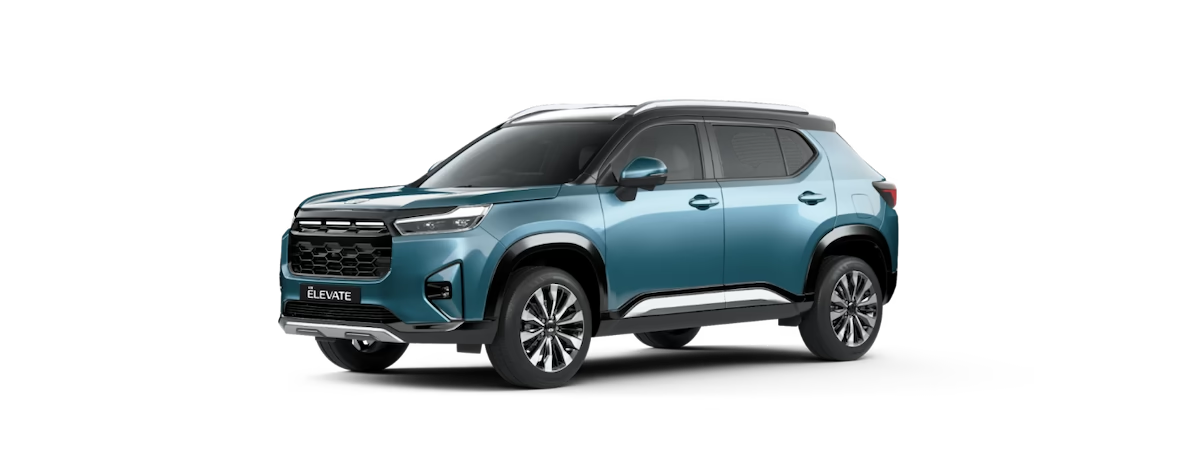
The Honda Elevate arrived in 2023 as one of the last genuinely clean, naturally aspirated SUVs in a segment fast filling with turbo-petrols, hybrids and diesels, and carved out a loyal following for exactly that reason. This mid-life facelift updates the styling at both ends, brings in a meaningful feature upgrade, and arrives in five variants (SV, V, VX, ZX and a new ZX+) with introductory pricing from ₹1.80 lakh to ₹8.40 lakh ex-showroom. Mechanically, nothing has changed, and that will either reassure you or disappoint you depending on what you were hoping for.
A Cleaner Face, the Same Proportions
The Elevate’s clean, boxy SUV shape hasn’t been touched; the facelift concentrates its changes at the front and rear. Up front, the Honda badge migrates from the grille to the bonnet, the grille now gets a split LED pilot lamp at the top, and the lower bumper is finished in gloss black with a faux skid plate. LED headlamps with twin-pod clusters and DRLs remain, now accompanied by front parking sensors and the camera for the new 360-degree view system integrated into the grille. At the rear, the connected LED tail-lamp strip from the outgoing car is now fully illuminated rather than having dark sections, and the rear bumper picks up the same gloss black treatment as the front. Body-coloured door handles replace the chrome ones from the outgoing model, and brushed silver inserts on the doors are new. A new Nordic Forest Pearl paint shade joins the existing palette of six single-tone options, with dual-tone Crystal Black Pearl roof available on three of them.
The car measures 4,312mm long, 1,790mm wide and 1,650mm tall on a 2,650mm wheelbase with 220mm ground clearance and a tight 5.2-metre turning radius. The 17-inch alloys have been carried forward unchanged, which is a missed opportunity at this stage of the car’s life. Build quality remains consistent with the City sedan: satisfactory rather than exceptional, with no panel flex or obvious quality drops.
The 1.5 i-VTEC: Honest, Calm, Not Fast
The 1.5-litre four-cylinder i-VTEC petrol makes 119 BHP at 6,600 rpm and 145 Nm at 4,300 rpm, unchanged from the outgoing car and offered with a 6-speed manual or a 7-speed CVT. It’s one of the few naturally aspirated engines left in this segment, and its character is distinct from the turbo-petrols that dominate here. Start up the CVT and the four-cylinder refinement is immediately apparent, with no vibrations through the steering, pedals or body at idle. The CVT moves the car away from a standstill smoothly, and in stop-and-go city traffic the seamless, jerk-free experience is genuinely relaxing. Light-footed inputs see it build speed gradually and linearly, which suits the Elevate’s overall character well.
Floor the accelerator for a quick overtake and the CVT’s limitations show up clearly: revs climb, but speed takes its time catching up, the familiar rubber-band effect. If you’re used to the instant response of a turbo-petrol or the kick of a fast dual-clutch gearbox, this will feel laboured. Paddle shifters are available but don’t replicate actual gear steps and are more curiosity than tool. Out on the highway, the engine’s free-revving nature becomes its best quality: it pulls cleanly all the way to 6,500 rpm without a flat spot, cruising at 2,000 rpm at 100 km/h and 2,500 rpm at 120 km/h, settled and relaxed. Overtaking on undivided roads needs planning rather than a quick stab of the throttle, and maintaining momentum is a better strategy than accelerating from low speed.
The engine sounds refined at low revs but strained when pushed hard, which is not a note you’d seek out. Honda claims refinement improvements on this facelift, though the difference over the outgoing car isn’t immediately obvious. Wind and road noise become noticeable at 100 km/h and manageable up to 120 km/h. ARAI figures are 15.31 km/l for the manual and 16.61 km/l for the CVT; real-world ownership data from the outgoing car suggests 10-11 km/l in the city and 15-18 km/l on the highway. A 40-litre fuel tank is on the smaller side for a segment where 50 litres is the norm, so highway run range could be better.
Ride and Handling: The Elevate’s Strongest Suit
Nothing has changed here mechanically (MacPherson struts up front, a torsion beam at the rear), and that’s fine, because the Elevate’s suspension has always been one of its most convincing arguments. At low speeds in the city, small to medium potholes are absorbed quietly and without drama; the long suspension travel works in the car’s favour here, meaning unexpected large potholes taken at speed are dealt with more composure than most rivals. There’s an underlying stiffness that introduces some jiggly movement over continuously broken surfaces, and body movement is noticeable in those conditions, but neither is uncomfortable.
On the highway, the picture is better still. Straight-line stability is genuinely impressive, with very little vertical movement over expansion joints and no floaty feel even at sustained triple-digit speeds. On winding roads the Elevate rewards a spirited approach: front end turn-in is responsive, body roll through corners is well managed without ever feeling unnerving, and there’s very little understeer. The car feels smaller than it is, masks its height well, and stays composed through quick direction changes. The 215/55 R17 efficiency-oriented tyres provide adequate grip for regular driving; enthusiastic drivers may want an upgrade, but most buyers won’t need to bother. Steering is light and easy at parking speeds with a well-weighted feel at highway pace, though it doesn’t communicate much back to the driver. CVT variants get rear disc brakes; the manual keeps rear drums. The overall braking feel is progressive and confident, with good composure under emergency stops.
Updated Cabin, Feature Gaps That Still Bite
The cabin’s layout is unchanged, now finished in a new black-and-white theme shared with the City facelift, with leatherette inserts on the door pads and a chunky leather-wrapped steering wheel. The front seats have been redesigned on City facelift lines, a touch less contoured than the outgoing Elevate’s but still well-supporting, with firm cushioning that suits long drives. Meaningfully, both are now powered: 8-way adjustment for the driver, 4-way for the passenger. Both front seats are ventilated, as are the rear seats, making the Elevate the first car in its segment to offer rear ventilation, a genuine summer-heat win for rear passengers in India.
A 10.25-inch touchscreen runs wireless Android Auto and Apple CarPlay and is easy to navigate, though the interface looks dated compared to rivals. Climate control is a single-zone automatic unit with physical buttons that are easy to use without looking away from the road, a genuine ergonomic advantage over touchscreen-only rivals. A PM 2.5 air purifier now comes as standard, with its AQI reading displayed on the climate panel. Other new additions include a wireless charging pad, walk-away auto lock, an electronic parking brake with auto-hold, and single-tone ambient lighting in orange. Boot space is a useful 458 litres with a comfortable loading height.
The gaps are worth naming plainly: the audio system is 4 speakers and 4 tweeters with no subwoofer, which sounds noticeably thin for the price. The 10.25-inch touchscreen’s interface feels dated against the segment. Rain-sensing wipers haven’t been added. The sunroof remains a single-pane unit with no panoramic option. The Level 2 ADAS system is camera-only with no rear radar, so blind-spot monitoring, rear cross-traffic assist and similar radar-dependent features are absent. The driver’s door seatback pocket present on the pre-facelift car has been deleted here, and only the driver’s window gets one-touch up and down. Dummy buttons on the dashboard are a persistent annoyance.
Honda Elevate Facelift: Variant-wise Prices (Ex-showroom)
| Variant | Manual (6-Speed MT) | Automatic (7-Speed CVT) |
|---|---|---|
| SV | ₹1,80,000 | N/A |
| V | ₹2,29,000 | ₹3,79,000 |
| VX | ₹3,93,000 | ₹5,39,000 |
| ZX | ₹5,39,000 | ₹6,89,000 |
| ZX+ | ₹6,80,000 | ₹8,30,000 |
| ZX+ Black Edition | ₹6,90,000 | ₹8,40,000 |
Who Should Still Consider the Elevate?
The 2026 Elevate facelift is the best version of the car Honda has made, and for the right buyer it’s still a compelling choice. The ride and handling balance remains class-competitive, ownership reliability and after-sales support are real advantages, and the feature additions (rear ventilated seats, powered front seats, and a 360-degree camera) address the most commonly cited gaps from the outgoing model. The 7-year extended warranty and 10-year anytime warranty option are genuinely hard to match in this segment. What it doesn’t offer is a turbo-petrol, a hybrid, a panoramic sunroof, a capable audio system, or the driving excitement that competing turbocharged engines can generate. Buyers who prioritise smooth, fuss-free urban commuting, long-term reliability, and low running costs will find the Elevate well suited to that brief; those looking for outright pace or cutting-edge technology should weigh the Creta, Seltos or Duster alongside it before deciding.
Planning to buy the Honda Elevate Facelift?
Authorized dealerships in your city put forward their best on-road price upfront, compare transparent offers side by side right from your phone. Free for buyers, with zero spam calls.
Related Stories

Get insights in your inbox
Every week, our editorial team brings you the biggest price cuts, car reviews and comparisons and car-buying guides - so you never miss out