Mahindra XUV 3XO ZNG Review: Turbo CNG Done Right
Mahindra brings the XUV 3XO into the CNG segment with full turbo power and factory backing. Here's what the ZNG delivers on Indian roads.
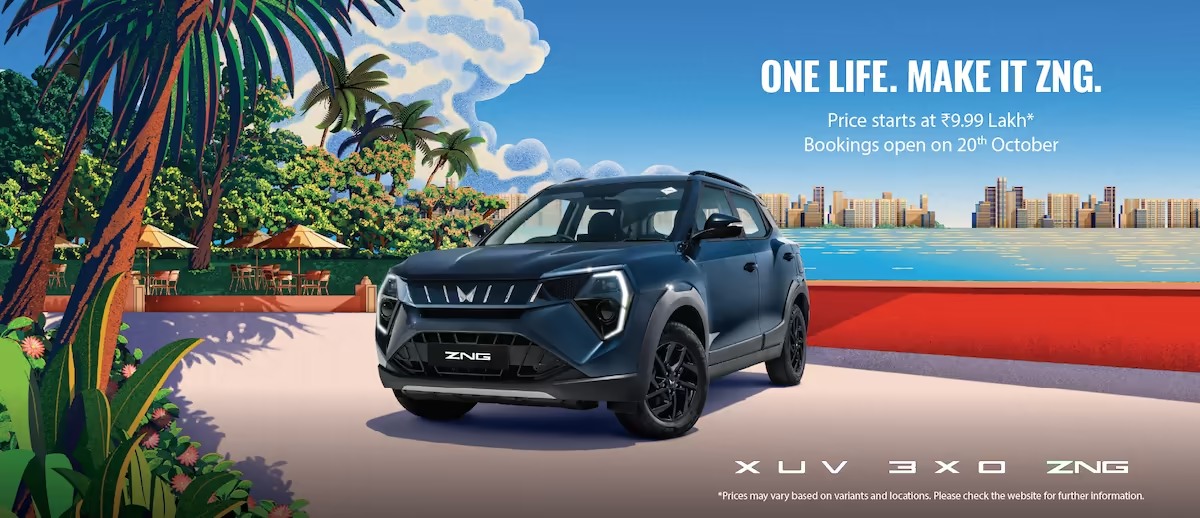
The sub-4m SUV segment in India is where the real volume wars are fought, and every manufacturer with a serious stake in it eventually has to offer a CNG option. Mahindra has arrived at that point with the XUV 3XO ZNG, and they have done something no other CNG compact SUV maker has managed so far: kept the turbo-petrol engine completely unchanged between fuel modes. The ZNG produces 110 BHP and 200 Nm in both petrol and CNG modes, which puts it ahead of the Maruti Brezza S-CNG and Tata Nexon CNG outright. Priced between Rs. 9.99 lakh and Rs. 12.27 lakh (ex-showroom), the ZNG enters as a higher-entry proposition than some rivals at the base, but is the most affordable at the top-variant level.
What’s New on the XUV 3XO ZNG
The ZNG is built on the existing XUV 3XO platform with targeted changes for the bi-fuel setup rather than a ground-up redesign. Dimensionally, nothing changes. The body gets a body-coloured upper radiator grille in place of the glossy black unit on the standard car, a small but noticeable visual distinction. Six colours are on offer: Jeans Blue, Tango Red, Everest White, Galaxy Grey, Nebula Blue, and Stealth Black, with the RevX A variant adding a contrasting black roof.
Wheel choices vary by variant. The top AX5 and RevX A get 16-inch diamond-cut alloy wheels shod with 205/65 section tyres, while the lower variants ride on 16-inch painted black alloys or steel wheels with covers. One notable absence: the top RevX A trim does not get fog lamps, though Mahindra has retained the full light stalk from higher variants so that aftermarket fog lamps can be added later without extra switchgear.
The factory-fitted twin-cylinder CNG setup sits under the boot floor, with a total water capacity of 60 litres. This packaging decision is what keeps the boot usable at 270 litres, though it is a step down from the standard car’s 364 litres and trails the Tata Nexon iCNG’s 321 litres and Maruti Brezza CNG’s 328 litres. Safety hardware includes integrated gas-leak detection that automatically shifts the car to petrol mode on detection, an NGV1 receptacle nozzle with a micro switch that cuts ignition the moment the fuel flap opens, and a fire extinguisher stowed under the front passenger seat. Mahindra targets 5-star BNCAP compliance and backs the ZNG with a 3-year unlimited-km warranty, plus three years of free roadside assistance.
Behind the Wheel of the ZNG Turbo
The 1.2-litre, three-cylinder mStallion turbocharged engine is the ZNG’s biggest talking point. Paired with a 6-speed manual gearbox, it uses a 10-bar direct CNG injection system that Mahindra claims is a first for a production CNG car in India. The headline claim of identical 110 BHP and 200 Nm in both petrol and CNG modes is not marketing spin. On the road, CNG mode feels genuinely strong, and the performance gap that typically defines CNG cars simply does not show up here.
Engine refinement for a three-cylinder is impressive. At idle, vibration at the steering wheel and gear lever is minimal, and the motor is quiet enough that most passengers will not identify it as a three-pot. Mode switching between petrol and CNG is handled by a button to the right of the steering wheel, and the transition is completely seamless with no audible clunk or drivability interruption.
From a standstill, the car pulls cleanly. The engine can manage from below 1,000 rpm without protest in higher gears, so constant downshifting in city conditions is not a requirement. The usable band opens up properly from around 1,500 rpm, and post-2,000 rpm is where the turbo delivers a noticeable surge. That surge is the one dynamic trait that needs acclimatisation. Power delivery in the mid-range is spiky rather than linear, which means smooth low-speed progress with passengers requires a measured right foot until the driver has calibrated to the engine’s character. On the highway, the mid-range punch makes overtaking genuinely effortless with a gear drop. The top end above 5,000 rpm offers diminishing returns, but the 0-100 km/h time of 11.8 seconds in CNG mode tells the real story: this is the quickest CNG compact SUV at launch. The engine note at higher revs is sporty and pleasant, nothing like the strained soundtrack most CNG motors produce under load.
The 6-speed gearbox is light and slots cleanly into every gate, but its throws are longer than the segment average. In stop-and-go traffic, both the long-travel clutch pedal and the extended gear lever throws become tiring over time. The absence of a dead pedal adds to the fatigue on longer urban commutes. For a car with this level of powertrain capability, a shorter, snappier gearshift action would have made a meaningful difference to the driving experience. There is no automatic option available at launch, which will push some buyers toward the competition.
Mahindra’s start-stop system is present and can be switched off. It tends to hesitate in heavy traffic and temporarily cuts A/C cooling when it cuts the engine, both valid reasons to leave it off for most urban use.
Suspension and Steering Feel
The ZNG rides on independent MacPherson struts at the front and a semi-independent twist-beam at the rear, on 205/65 section rubber. At low speeds, the ride is composed and mature. Small surface irregularities are absorbed quietly, and the setup carries a sense of solidity that is typically associated with larger Mahindra products. Larger potholes make a presence in the cabin, but the car never feels unsettled. The suspension is confidence-inspiring over rough patches, and a touch of extra speed over a broken road section does not produce drama.
Highway composure is strong. The wide front and rear tracks give the ZNG a planted stance, and at sustained highway speeds the ride flattens out further, with expansion joints and minor undulations absorbed without passing through to the cabin.
In corners, the chassis is more capable than most buyers in this segment will ever demand of it. Direction changes are smooth, body roll is well managed, and the car holds its line predictably at higher cornering speeds. The 205/65 tyres provide adequate grip for the power on offer.
The steering is the one area where the ZNG’s dynamics package falls short of its own potential. Three selectable modes are available via a centre fascia button: Comfort, Normal, and Sport. Comfort mode is genuinely one-finger-light for urban parking and low-speed manoeuvres. Sport mode adds meaningful heft for highway driving. The issue is that across all three modes, the steering lacks the on-centre feel and road feedback that would make a confident chassis feel truly engaging. It is precise in terms of directing the car, but vague in terms of communicating what the front wheels are doing, particularly on twisty roads. Braking is strong: all-wheel disc brakes with ABS, EBD, and ESC deliver well-controlled stops. The bite is sharp, and progressiveness at the pedal could be a touch more linear for everyday ease, but emergency responses are clean and drama-free.
Cabin, Space, and Daily-Use Tech
The XUV 3XO’s dual-tone black-and-white dashboard carries over unchanged to the ZNG. The fully digital instrument cluster displays both CNG and petrol fuel gauges simultaneously, a MID screen showing the active fuel mode, real-time economy figures for each, and a ratio readout of how much time the car has spent in each mode. This is thoughtful, practical information for buyers who want to track CNG usage against petrol consumption day to day.
Interior quality on the ZNG is a step below what the top regular variants deliver. Leatherette inserts on the passenger-side dashboard and door pads, auto-dimming interior mirror, cooled and illuminated glovebox, wireless charging, and the Harman Kardon audio system are all absent in the ZNG lineup. RevX Edge (O) and RevX A variants do get black leatherette seat upholstery, which lifts the cabin feel noticeably over the fabric seats in lower trims.
Five adults fit comfortably. The rear seat has adequate legroom for occupants up to average height, and the wide body gives shoulder room that the sub-4m class does not always deliver. The 270-litre boot is usable for weekend grocery runs and short trips, though buyers accustomed to the standard XUV 3XO’s 364-litre boot will notice the reduction. The twin CNG cylinders are concealed under the boot floor with valves accessible from inside the boot.
Feature highlights on the top RevX A include a panoramic sunroof, wireless Android Auto and Apple CarPlay, auto LED headlamps and wipers, six airbags, ESC, TPMS, and connected car features. The AX5 gets a single-pane sunroof and diamond-cut alloys. Ventilated seats, a full-size spare wheel, and a dead pedal are absent across the ZNG range, which are meaningful quality-of-life omissions given the price bracket.
Should You Buy the XUV 3XO ZNG?
| Variant | Manual (6-Speed MT) |
|---|---|
| MX Edge | Rs. 9,99,000 |
| RevX Edge (O) | Rs. 10,79,000 |
| AX5 | Rs. 11,19,000 |
| RevX A | Rs. 12,27,000 |
The XUV 3XO ZNG makes a genuinely compelling case in the CNG compact SUV space, and it does so on the strength of one argument that is hard to argue against: full turbo performance with no CNG penalty. No other CNG sub-4m SUV offers 110 BHP and 200 Nm in bi-fuel mode, and that power advantage translates directly into confidence on national highways and effortless city progress once the driver acclimatises to the spiky mid-range delivery.
The reservation list for buyers should be short but honest. Only a manual gearbox is available, and its long throws and long-travel clutch become fatiguing in dense urban traffic. The steering lacks the feedback the otherwise capable chassis deserves. And the ZNG’s variant range stops short of the full XUV 3XO feature list, with ventilated seats, fog lamps, a full-size spare, and the Harman Kardon system all absent.
For buyers who cover meaningful highway distances, value an OEM CNG setup with factory warranty, and are comfortable with a manual gearbox, the RevX A at Rs. 12.27 lakh is the trim to target. For predominantly city-bound buyers who want a relaxed automatic, waiting to see if Mahindra adds an AMT to the ZNG range or choosing the Tata Nexon iCNG makes more practical sense.
Planning to buy the Mahindra XUV 3XO ZNG?
Authorized dealerships in your city put forward their best on-road price upfront, compare transparent offers side by side right from your phone. Free for buyers, with zero spam calls.
Related Stories
Get insights in your inbox
Every week, our editorial team brings you the biggest price cuts, car reviews and comparisons and car-buying guides - so you never miss out