Kia Sorento Review: Refined Family SUV, Rich Top-End Price
Kia's flagship 7-seater SUV offers a petrol-hybrid or diesel, 10 airbags and Level 2+ ADAS from ₹7.99 lakh. Here's which variant makes sense.
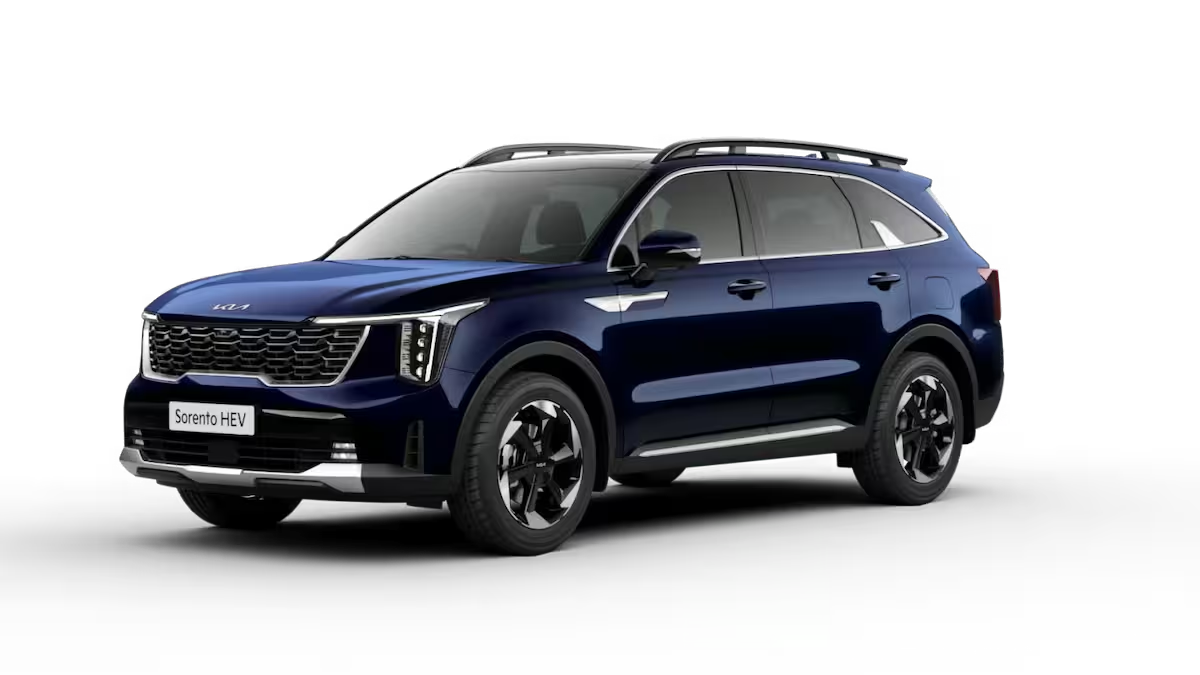
The Kia Sorento sits above the Seltos as the brand’s flagship family SUV in India, aimed squarely at buyers who want a large, well-equipped 7-seater without stepping into luxury-brand money. It’s the 2024 facelifted version of a global bestseller, offered with a 1.6-litre turbo-petrol hybrid or a 2.2-litre diesel, in front-wheel-drive or all-wheel-drive forms depending on the trim. Prices start at ₹7.99 lakh ex-showroom, and the spread across variants is wide enough that choosing the right one matters more than choosing the right engine.
Big Kia Presence, Solid Underneath
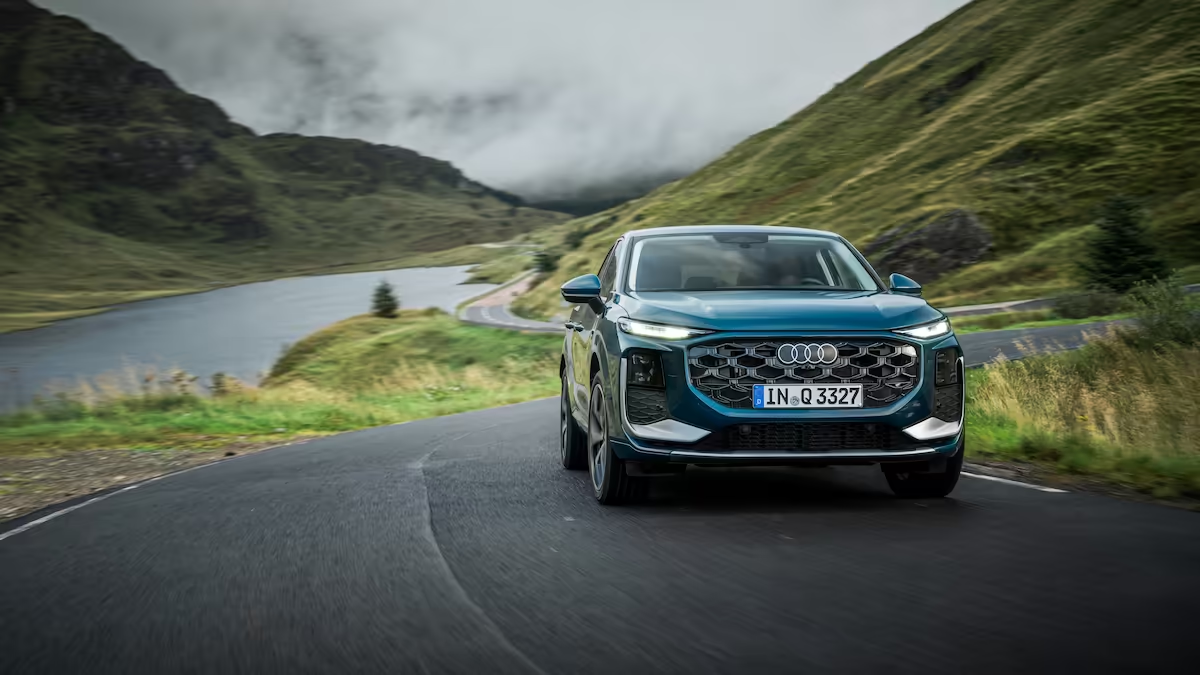
The Sorento wears Kia’s tiger-nose grille and vertical stacked headlamps on a tall, squared-off front end, and at 4,815mm long, 1,900mm wide and 1,785mm tall on a 2,815mm wheelbase, it commands attention without looking bloated. Doors close with real heft, paint quality is good, and the N3 platform it shares with the Carnival feels tightly put together. Ground clearance is 209mm on the diesel; the hybrid’s underfloor battery lowers it slightly, though Kia hasn’t published a figure. HTE and HTE (O) trims ride on 18-inch alloys, while everything above gets 19-inch diamond-cut wheels. A Black Line package adds blacked-out wheels, badges and garnishes. Safety is a genuine strength: 10 airbags, 12 parking sensors, five radars, a blind-spot view monitor, hill descent control and Level 2+ ADAS come with the package, backed by a 5-star Euro NCAP rating. Warranty is 3 years with unlimited kilometres, extendable to 5, and the hybrid’s high-voltage battery is covered for 8 years or 1,60,000 km.
Hybrid or Diesel: How the Sorento Drives
The hybrid pairs a 178 BHP, 265 Nm turbo-petrol engine with a 64 BHP traction motor and a conventional 6-speed torque-converter automatic, an unusual setup that prioritises efficiency over outright pace. It pulls away silently in EV mode, and the handover to the engine is smooth enough that you’ll only notice it if you’re listening for it. Kia hasn’t quoted a 0-100 km/h time, but expect roughly nine seconds, which is brisk rather than quick. Cruising is relaxed, with the engine turning around 2,000 rpm at 100 km/h in Sport mode. Eco dulls the throttle and keeps the car in EV mode as much as possible at low speeds, Sport gives sharper response best saved for highway overtakes, and Smart adapts to how you’re driving. The paddle shifters double as regeneration controls in Eco and Smart. ARAI figures stand at 19.60 km/l for the FWD hybrid and 17.70 km/l for AWD.
The diesel makes 190 BHP and 442 Nm from its 2.2-litre engine, shared with the Carnival, and pairs it with an 8-speed wet dual-clutch gearbox tuned for comfort. City driving is easy, with a healthy bottom end and shifts you barely notice. The highway is where it settles in best: roughly 1,500 rpm at 100 km/h and 1,700 rpm at 120 km/h in eighth gear, with no clatter or vibration reaching the cabin. Power builds progressively rather than arriving as an instant kick, so overtakes on undivided roads benefit from a little planning, and Sport mode helps. ARAI figures are 17.66 km/l for FWD and 15.79 km/l for AWD. Both powertrains share excellent insulation, with wind and road noise well suppressed at triple-digit speeds.
Ride, Handling, and How the Brakes Feel
Ride quality is the classic Kia tune: absorbent at low speeds over small and medium potholes, with a slight underlying stiffness from the 19-inch wheels. Large potholes taken with extra speed produce an audible thud, so a measured approach still pays off on broken roads. Highway stability is the standout, with no floatiness, no sensitivity to crosswinds and very little vertical movement, which makes the Sorento a genuinely good long-distance tourer. The monocoque body gives it car-like manners for its size, and the front end turns in willingly, backed by strong grip from the Vredestein Ultrac Vorti i tyres on the test car. Push harder through bends and the body roll and weight make themselves felt, which suits a family SUV that was never meant to be a driver’s car. Steering is light in the city with a 5.8-metre turning radius, and weights up sensibly at speed, though it offers little feedback.
Braking is where the two powertrains differ. The diesel’s pedal is progressive and easy to modulate, while the hybrid’s brakes feel softer, with a low bite point and less connection to the pedal. Both stop the car without drama, but the hybrid rewards early braking.
Life Inside the Sorento: Space, Seats and Features
HTX variants get a black-and-olive-brown cabin, while HTE and HTK come in black and grey. The dashboard uses soft-touch materials up top and harder plastics lower down, and the lighter grey theme arguably flatters the cabin more than the darker tan. Front seats are ventilated and on the firmer side, which works well on long drives, with 10-way power adjustment for the driver along with an Ergo-motion lumbar function. A 12.3-inch touchscreen runs wireless Android Auto and Apple CarPlay, alongside a 12.3-inch digital cluster, a head-up display, a digital key, a 360-degree camera, a front and rear dashcam, a dual-pane panoramic sunroof and a 12-speaker Bose system. Kia’s AI assistant handles voice commands, and there are six Type-C ports plus a 220V outlet.
The second row is the cabin’s best seat. Legroom and headroom are generous, backrests recline, rear seats are ventilated, and the front passenger seat’s Boss Mode button slides it forward for extra room. Taller passengers will find the floor slightly high, particularly on the hybrid, which affects under-thigh support. The third row is strictly for children, with a difficult climb-in, low seats and no legroom if the middle row is pushed back. Boot space is 179 litres with all seats up and 813 litres with the third row folded, which suits a family outstation trip comfortably.
Kia Sorento: Variant-wise Prices (Ex-showroom)
| Variant | Seating | Price |
|---|---|---|
| HTE | 7-Seater | ₹7,99,000 |
| HTE (O) | 7-Seater | ₹9,49,000 |
| HTK | 7-Seater | ₹2,49,000 |
| HTK (A) | 7-Seater | ₹3,49,000 |
| HTX | 6-Seater | ₹7,49,000 |
| HTX (A) | 6-Seater | ₹8,49,000 |
Which Sorento Should You Buy?
The Sorento is a refined, spacious and thoroughly equipped family SUV, with excellent insulation, a settled highway ride and a safety package that’s hard to match at this price. The HTK is the sweet spot, bringing the full cabin comfort and most of the technology without the jump to HTX, which adds around ₹ lakh largely because AWD is mandatory on the top trim. A front-wheel-drive HTX would have bridged that gap neatly. Choose the diesel if you cover long highway distances and want the better brake feel, and the hybrid if your driving leans toward the city. If you regularly need adult-friendly third-row seating, a larger MPV makes more sense; if your family sits comfortably in two rows with the occasional child in the third, the Sorento makes a convincing case.
Planning to buy the Kia Sorento?
Authorized dealerships in your city put forward their best on-road price upfront, compare transparent offers side by side right from your phone. Free for buyers, with zero spam calls.
Related Stories

Get insights in your inbox
Every week, our editorial team brings you the biggest price cuts, car reviews and comparisons and car-buying guides - so you never miss out