Maruti Baleno Facelift Review: Same Baleno, New Heart
The Baleno gets a new 3-cylinder engine, Level 2 ADAS, and ventilated seats. Here's whether the facelift is worth it over the outgoing car.
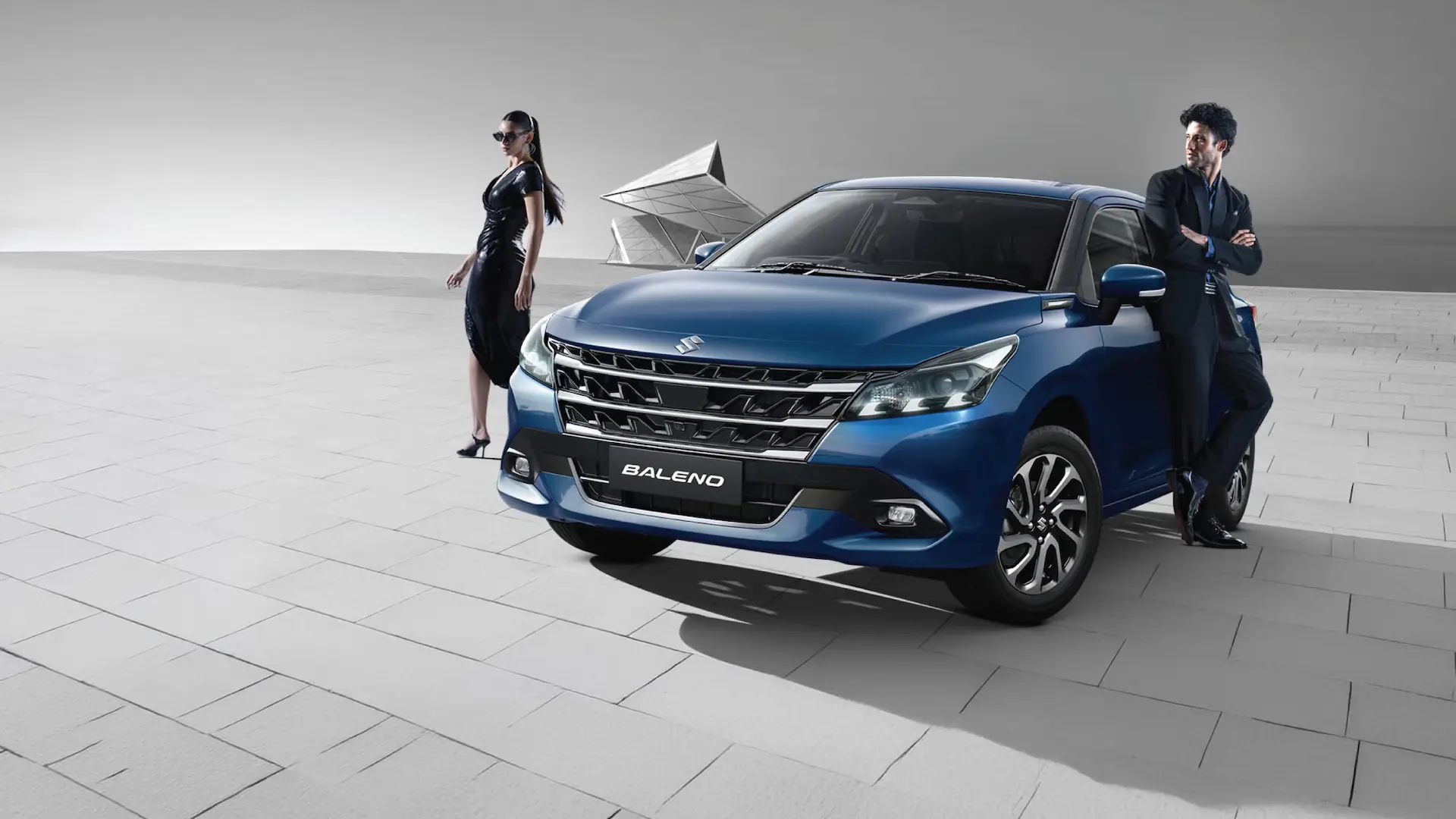
The Baleno sells around 16,000 units a month, which makes it one of the best-selling cars in India and a name Maruti can’t afford to get wrong. This mid-life facelift doesn’t touch the car’s fundamentals but does swap in a new engine, adds Level 2 ADAS, and throws in a few genuinely useful cabin upgrades. Prices start at ₹.10 lakh (ex-showroom) at launch, moving up to ₹.59 lakh for the range-topping Alpha (O) with a manual gearbox.
Baleno Facelift: Redesigned Face, ADAS Radar, and What Stays the Same
The face is the one part of the car that looks properly different. The grille has grown larger, gets chrome slats, and is shaped to flow into the air dam as a single unit, with the Suzuki badge moved above it, similar to how the Swift does it. The bumper and fog lamp housings have been redesigned to suit, and a chrome strip on the front fenders is new too, though it looks a little bolted-on rather than integrated. Step around to the side or rear and the story changes - nothing here has been touched. Same alloy wheel design, same taillamps, same profile. Overall dimensions stay unchanged at 3,990mm in length, 1,745mm in width, 1,530mm in height, and a 2,520mm wheelbase. Panel gaps remain consistent rather than tight, and there’s some flex in the body panels that gives the car an overall light feel, unchanged from before. A new Enigmatic Teal Green paint option joins the lineup, and the grille now houses the radar module and camera needed for the new ADAS suite.
1.2L Z-Series 3-Cylinder: How It Drives in City and on Highway
The bigger story is under the hood. Maruti has swapped the outgoing 1.2-litre, 4-cylinder K-Series engine for the 1.2-litre, 3-cylinder Z-Series unit already familiar from the Swift, paired with a 5-speed manual or AMT. This new engine makes 82 BHP and 112.4 Nm, down from the outgoing car’s 89 BHP and 113 Nm, so on paper the Baleno facelift is marginally less potent than before. In everyday driving, though, this doesn’t translate to a car that feels slow. Throttle response is smooth right from idle, and the car pulls away cleanly without needing much clutch or throttle input. It can crawl along in traffic from as low as 500 rpm without a downshift, and starts feeling properly comfortable from around 1,500 rpm, cruising happily at 50 km/h in 4th gear at that engine speed.
On the open road, brisk is the word, not fast. Power delivery stays linear throughout the rev range without any noticeable step-up, which means overtakes need some planning rather than an instant surge - downshifting is your friend here, especially since the fuel cut-off kicks in around 6,000 rpm and can catch you mid-overtake if you’re not paying attention. Highway cruising is relaxed, with 100 km/h arriving at roughly 2,500 rpm and 120 km/h at around 3,000 rpm in 5th gear. The three-cylinder thrum is present at idle, but it takes on a sportier note as revs climb, which enthusiast drivers will likely enjoy more than everyday commuters. The 5-speed manual itself is a genuine highlight - short, well-defined throws, a light clutch, and gearing that’s hard to miss even in a hurry.
On the refinement front, this new engine doesn’t quite match the smoothness of the outgoing K-Series unit. There’s a mild shake through the body at idle and some vibration through the floor and seats, though engine noise itself stays reasonably contained at low revs and only becomes noticeable as you push harder. Wind noise creeps in past 100 km/h but doesn’t become intrusive even up to 120 km/h, and road and tyre noise sit at an average level for the segment. On the upside, fuel efficiency has improved meaningfully with the smaller-displacement engine: ARAI-rated figures come in at 23.80 km/l for the manual and 24.77 km/l for the AMT, both noticeably better than the outgoing car, while the factory CNG variant returns 33.61 km/kg. The idling start-stop system works smoothly in traffic without feeling intrusive, and can be switched off if you’d rather not use it.
Taming Potholes, Tight U-Turns, and Highway Manners
Nothing has changed mechanically on the suspension front - it’s still a McPherson strut setup up front with a torsion beam at the rear. At city speeds, the ride stays absorbent and glides over the usual rough patches quietly, which has always been one of the Baleno’s strong points. Larger potholes do make themselves felt in the cabin, but the suspension handles them without much drama or noise. Push on to the highway and you’ll notice some bounciness at higher speeds, a byproduct of the car’s light weight, compact size, and softly-tuned suspension - nothing alarming, but a reminder to stick to sensible cruising speeds rather than pushing hard. Through long, sweeping curves the car holds its line confidently, and while there’s some body roll on twistier sections, it stays well controlled and never feels like it’s losing composure.
Steering is light and easy at city speeds, and combined with the car’s compact dimensions and a 4.85-metre turning radius, tight parking and U-turns are a non-issue. It weighs up nicely as speeds rise, staying settled and free of any nervous feeling on the highway, and on winding roads it’s quick and precise even if it doesn’t offer much feedback back to the driver. Braking uses discs up front and drums at the rear, with a pedal that offers decent feel and enough travel before it bites, bringing the car to a stop confidently without unsettling the chassis.
Life Inside the Baleno: Ventilated Seats, ADAS Tech, and Boot Space
Inside, most of the cabin will feel instantly familiar, with the same dashboard layout, a leather-wrapped flat-bottomed steering wheel, and a twin-pod instrument cluster, now augmented with a new ADAS display strip that shows solid white lane markers when the system has a properly detected road to work with. The 9-inch touchscreen with wireless Android Auto and CarPlay carries over and remains easy to navigate without any noticeable lag, paired with a 4-speaker, 2-tweeter Clarion sound system that handles vocals cleanly with minimal distortion even at higher volumes.
The genuinely new addition is seat ventilation on the fabric seats - a bit of a surprise given fabric upholstery doesn’t usually get this feature. It’s a suction-type system that pulls heat away rather than blowing cool air, and while it’s effective at the highest setting, it’s also noticeably noisy at that level. Other new additions include a Qi wireless charging pad with its own cooling fan, a tyre pressure monitor, and a 360-degree camera system with adaptive guidelines, though the camera quality itself isn’t particularly sharp. Boot space is rated at 318 litres, adequate for the segment, though the loading lip sits high enough that you’ll need to lift luggage over it rather than slide it in. A 15-inch steel spare wheel is tucked away underneath.
2026 Maruti Baleno Facelift: Variant-wise Prices
| Variant | Transmission | Ex-showroom Price |
|---|---|---|
| Sigma | Manual | ₹,98,900 |
| Delta | Manual | ₹,99,900 |
| Delta CNG | Manual | ₹,92,400 |
| Zeta | Manual | ₹,99,900 |
| Zeta CNG | Manual | ₹,92,400 |
| Alpha | Manual | ₹,09,900 |
| Alpha (O) | Manual | ₹,49,900 |
| Variant | Transmission | Ex-showroom Price |
|---|---|---|
| Delta AGS | Automatic | ₹,49,900 |
| Zeta AGS | Automatic | ₹,49,900 |
| Alpha AGS | Automatic | ₹,59,900 |
| Alpha (O) AGS | Automatic | ₹,99,000 |
Baleno Facelift: Final Word and Sweet-Spot Variant
The Baleno facelift doesn’t reinvent the car, and that’s mostly fine - the things it’s always done well, like ride comfort, an easy driving experience, and a spacious-feeling cabin, remain untouched. The new engine trades a small amount of outright performance for a genuine bump in fuel efficiency, which will matter more to most Baleno buyers than a couple of tenths off the 0-100 time. Level 2 ADAS, ventilated seats, and the redesigned front end bring the car’s feature list closer to where the segment currently sits, even if the alloy wheel design and rear styling could have used more attention. For buyers cross-shopping the Hyundai i20, Tata Altroz, and Toyota Glanza, the Zeta variant looks like the sweet spot - it brings in the alloy wheels, the touchscreen, and enough safety kit without stretching into Alpha territory, making it the trim most buyers should seriously consider.
Planning to buy the Maruti Baleno Facelift?
Authorized dealerships in your city put forward their best on-road price upfront, compare transparent offers side by side right from your phone. Free for buyers, with zero spam calls.
Related Stories

Get insights in your inbox
Every week, our editorial team brings you the biggest price cuts, car reviews and comparisons and car-buying guides - so you never miss out