Renault Duster Strong Hybrid E-Tech 160 Review: 29 km/l and Still Fun
Renault's Duster Strong Hybrid brings 158 BHP, a 29 km/l ARAI rating, and genuinely good road manners. Here's how it drives in the real world.
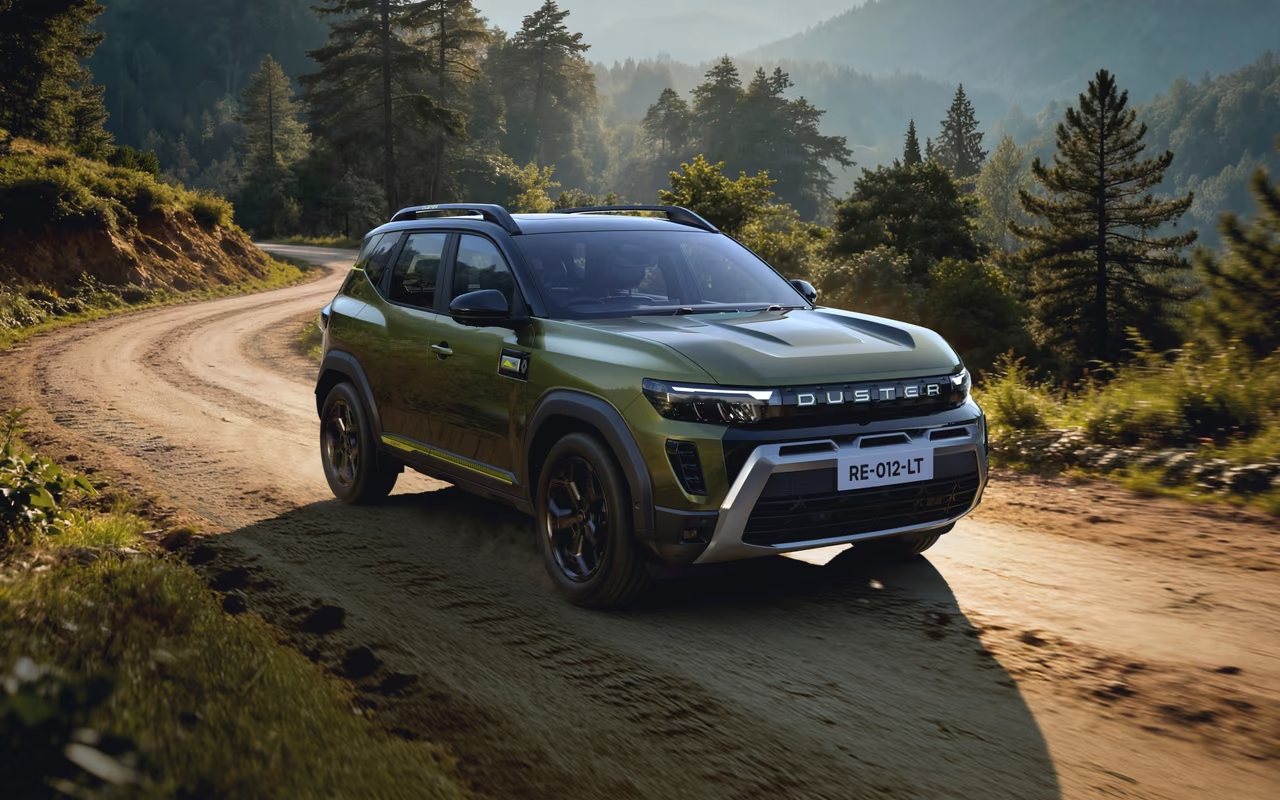
When Renault launched the third-generation Duster in India earlier this year, it arrived with only turbo-petrol options, which left a gap for buyers seeking lower running costs. That gap closes with the Duster Strong Hybrid E-Tech 160. Priced from Rs. 16.99 lakh to Rs. 19.69 lakh (ex-showroom), it enters a well-defined battleground against the Maruti Grand Vitara, Maruti Victoris, and Toyota Urban Cruiser Hyryder, while also taking aim at diesel variants of the Hyundai Creta, Kia Seltos, and Tata Sierra. The headline numbers are hard to ignore: 158 BHP of combined output, a 29 km/l ARAI rating, and 212mm of ground clearance on a platform Renault has engineered with frequency-dependent damping. On paper, this is the most complete Duster yet.
Design and Powertrain Updates
Visually, the Strong Hybrid is nearly identical to the turbo-petrol Duster. The differences are deliberate and subtle rather than stylistic. E-Tech Hybrid badging appears on the front doors and tailgate. The illuminated “DUSTER” lettering at the rear is carried over. The radiator grille gets a black protrusion in the centre where the 360-degree camera housing would sit on the Iconic turbo-petrol, which does leave a slightly unfinished impression on close inspection.
The more significant visual absence is fog lamps, dropped entirely across all Strong Hybrid variants. Wheel choices are 18-inch Outback diamond-cut alloys on the Emotion variants and 18-inch Ridge flex wheels on Evolution and Techno, all shod with 225/55 section Ceat SecuraDrive tyres. The underbody gets a healthy run of protective cladding at the front and rear, consistent with the Duster’s rugged positioning.
Under the bonnet sits a 1.8-litre, four-cylinder naturally aspirated petrol engine producing 109 BHP and 175 Nm, paired with a starter-generator and a traction motor developing 49 BHP. Combined system output is 158 BHP and 208 Nm, which comfortably outguns every direct rival in the segment. Power goes to the front wheels through a multi-mode automatic transmission with two electric gears and four petrol gears, inspired by Renault’s Formula 1 engineering. A 1.4 kWh, 247V NMC Lithium-ion battery backs the electric side of the system. Renault covers the battery with an 8-year or 1,60,000 km warranty, and the car itself comes with a standard 3-year or 1,00,000 km warranty with an extendable option to 4 years or 1,50,000 km.
Driving the E-Tech 160 in City and Highway Conditions
Start the Duster Strong Hybrid and nothing happens audibly. The car wakes up in electric mode, instrument cluster lights up, and the “READY” indicator appears without a cranking starter or engine note. For anyone new to hybrid cars, the silence genuinely takes a moment to register. Lift off the brake and the car moves at 8 km/h without any throttle, which takes virtually all fatigue out of slow urban traffic.
The electric motor’s instant torque makes a meaningful difference in city driving. The car responds immediately to any throttle input and can close gaps in traffic without asking the petrol engine to wake up. Renault claims up to 80% of city commuting can be completed in electric-only mode, and on a measured city drive that figure is credible. The silence in EV mode makes the cabin feel genuinely relaxing compared to a conventional petrol crossover of this size. The petrol engine steps in when the battery reserve drops below a threshold or when a heavier throttle demand is made, and the transition between the two power sources is smooth enough that most occupants will only notice it through sound rather than any driveline jerk.
Power delivery is linear throughout the rev range. Throttle response is satisfying, and the car handles everything from bumper-to-bumper traffic to brisk highway merges without protest. Renault’s claimed 0-100 km/h time of 9.61 seconds puts it among the quicker options in its price bracket, and that pace feels real on the road. Slow-moving vehicles on undivided highways are dispatched without needing to think twice about gearing or positioning.
The multi-mode automatic transmission works transparently in normal city driving. With a light foot, shifts are smooth and well-timed. The one area where the gearbox shows its character under pressure: kickdown response is not the fastest, and the transmission can hold a gear longer than feels natural when the driver wants to accelerate decisively. Paddle shifters are absent, which would have given a meaningful degree of control during planned overtaking on the highway. The “B” mode, engaged via the gear selector, increases regenerative braking during deceleration, recovering more energy on downhill stretches and in heavy stop-and-go conditions.
Eco mode is available via a switch to the right of the steering wheel. It softens throttle response, adjusts shift points for maximum efficiency, and reduces draw on auxiliary systems including the A/C. It is well-suited for relaxed city commuting and remains entirely usable on the highway given the power reserve available. The E-Save function is a separate, thoughtful addition: it instructs the system to prioritise the petrol engine and actively recharge the battery to a set level rather than drawing it down, preserving electric range for a specific section of driving ahead, such as a slow residential area or a congested city stretch at the end of a highway run.
NVH management is one of the Duster’s stronger suits. The 4-cylinder petrol engine enters the cabin as a background hum rather than intrusion when it runs, and it never requires occupants to raise their voices. The generator note when recharging the battery under load is faintly audible and takes a few drives to stop noticing entirely, but it sits well short of being bothersome. Wind and road noise become perceptible above 100 km/h but remain composed up to 120 km/h.
Fuel efficiency after approximately 160 km of testing that included hard acceleration, fast driving, and extended idling for photography came in at around 15 km/l. Under normal mixed driving, 20 km/l or above is achievable, and the 29 km/l ARAI rating with Renault’s claimed 1,400 km range on a 50-litre tank sets a benchmark in the segment.
How the Duster Rides on Indian Roads
The Strong Hybrid uses MacPherson struts at the front with an anti-roll bar and a twist beam with coil springs at the rear, both with frequency-dependent damping (FDD). The FDD setup is the meaningful upgrade over the standard turbo-petrol suspension and it shows immediately on poor roads. At low speeds, the Duster absorbs broken surfaces, potholes, and uneven patches with a composure that feels more like a larger SUV than a sub-4m crossover. Larger impacts register but do not transmit sharply into the cabin. The suspension works quietly throughout, with no suspension noise or harshness on rough patches.
Highway ride quality is a genuine strength. The added mass of the hybrid battery and drivetrain components makes the Strong Hybrid feel more planted and settled than the turbo-petrol at triple-digit speeds. Expansion joints and minor undulations flatten out as speed builds. The 212mm ground clearance makes the Duster confidence-inspiring on rough village roads and broken highway shoulders.
Body roll on hard cornering is present but well controlled. The 225/55 section tyres provide consistent grip, and the car holds its intended line through corners without nervous mid-corner corrections. High-speed stability is reassuring; the car tracks straight with no wander.
The electric power steering is well-weighted for urban use and gains appropriate heft on the highway. Feedback could be a touch more communicative when pushing through twisty sections, but for the daily use this car is built for, the calibration is sensible. An additional mode of steering weight would have been welcome given that the turbo-petrol gets Multisense drive modes with selectable steering character, which the Strong Hybrid does not offer.
Braking is strong at both ends: four-wheel disc brakes with ABS, EBD, brake assist, and ESC deliver composed, drama-free stops from highway speeds and sharp responses in emergency situations.
Cabin, Space, and Daily-Use Tech
Interior quality is a clear step up from the previous Duster generation and holds its own against the current segment average. The Emotion variant’s cabin gets a brown and black theme with carbon fibre finish and dune brown leatherette inserts on the dashboard and door pads. The Techno gets a desert beige and black theme, while the Evolution variant stays with all-black. Dune brown leatherette upholstery covers the seats across Techno+ and Iconic variants, with electrically adjustable and ventilated front seats adding genuine daily comfort in Indian summer conditions. The pedal placement is well-spaced, and a narrow but usable dead pedal is present.
The 10.25-inch digital instrument cluster has been modified for the hybrid drivetrain, displaying battery charge level, active drive mode, energy flow direction, EV usage ratio, and fuel economy for both the electric and petrol modes simultaneously. It is genuinely informative rather than decorative. The 10.1-inch openR Link touchscreen does not carry Google integration, which is one of the feature deletions compared to the top turbo-petrol Iconic trim. Wireless Android Auto and Apple CarPlay are present, along with a wireless charging pad with cooling, a hybrid-specific energy flow display on the touchscreen, a real-time driving score, efficiency tips, and distance driven in pure EV mode. A reversing camera is included but image quality is average.
The panoramic sunroof, dual-zone climate control, electric tailgate, and air purifier are all carried over from the turbo-petrol to the Strong Hybrid. What is absent, and worth knowing before shortlisting, is a meaningful list: no fog lamps, no rain-sensing wipers, no auto-dimming interior mirror, no Multisense driving modes, no hill descent control, no 360-degree camera, and no ADAS. These are features available on the Rs. 19-20 lakh turbo-petrol Iconic variant, and their absence at the same price bracket is a genuine trade-off buyers need to factor in.
Rear passenger space is comfortable for two adults with adequate legroom and shoulder room. The rear seat does not recline, and rear sunblinds are absent. Boot space on the Strong Hybrid measures 372 litres to the parcel shelf and 544 litres to the roofline, which represents a reduction from the turbo-petrol’s 518 litres and 700 litres respectively, but still leads every direct hybrid rival in the segment. There is no spare wheel under the boot floor; a puncture repair kit sits in a Styrofoam case instead. Given that the wheel well can physically accommodate a spare, sourcing one independently is a straightforward and worthwhile addition.
Should You Buy the Renault Duster Strong Hybrid?
| Variant | Engine | Ex-showroom Price |
|---|---|---|
| Evolution | 1.8L Strong Hybrid E-Tech 160 | Rs. 16,99,000 |
| Techno | 1.8L Strong Hybrid E-Tech 160 | Rs. 18,99,000 |
| Techno Dualtone | 1.8L Strong Hybrid E-Tech 160 | Rs. 19,19,000 |
| Emotion | 1.8L Strong Hybrid E-Tech 160 | Rs. 19,49,000 |
| Emotion Dualtone | 1.8L Strong Hybrid E-Tech 160 | Rs. 19,69,000 |
The Duster Strong Hybrid E-Tech 160 is the most technically compelling option in the hybrid compact SUV segment right now. The combination of 158 BHP, a genuine 20+ km/l real-world fuel efficiency expectation, frequency-dependent damping, and a 212mm ride height puts it ahead of the Maruti and Toyota hybrids on the metrics that matter most to the performance-and-efficiency buyer.
The trade-offs are real and should not be underestimated. The absence of fog lamps, ADAS, a 360-degree camera, rain-sensing wipers, Multisense drive modes, hill descent control, and a spare wheel at this price level is a meaningful package downgrade compared to the turbo-petrol Iconic. The multi-mode transmission’s long-term reliability also lacks the established track record of Toyota’s hybrid system, which has years of Indian ownership data behind it. Renault’s after-sales service consistency across India is variable and worth researching for your specific city before committing.
For buyers who cover mixed city and highway distances regularly, value running cost savings above the feature count, and are prepared to manage without ADAS and some convenience features, the Emotion variant at Rs. 19.49 lakh is the one to choose. If the feature list matters as much as fuel efficiency to you, the turbo-petrol Iconic remains the more complete package at a comparable price.
Planning to buy the Renault Duster Strong Hybrid E-Tech 160?
Authorized dealerships in your city put forward their best on-road price upfront, compare transparent offers side by side right from your phone. Free for buyers, with zero spam calls.
Related Stories
Get insights in your inbox
Every week, our editorial team brings you the biggest price cuts, car reviews and comparisons and car-buying guides - so you never miss out