Renault Triber Turbo Petrol Review: Finally, the Engine It Deserved
The Triber's biggest weakness has been fixed with a proper 1.0L turbo-petrol. Here's whether India's cheapest 7-seater MPV is finally the complete package.
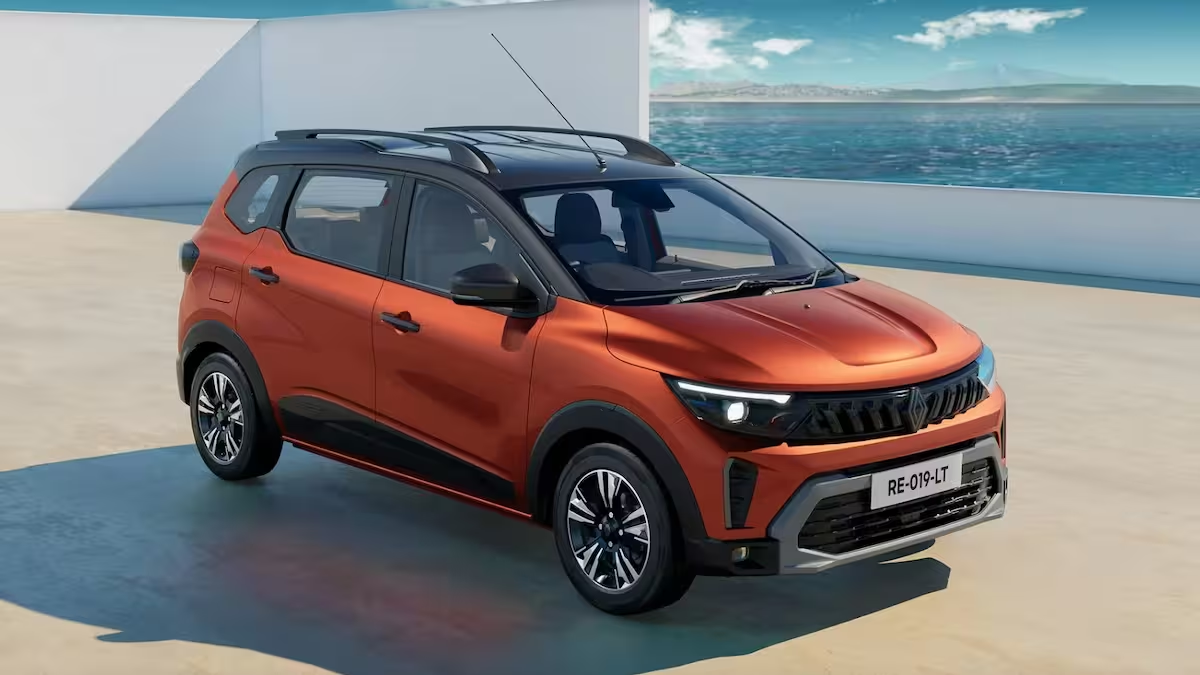
The Renault Triber has carved out a genuinely unique spot in the Indian market since 2019 - a proper 7-seater MPV priced like a B-segment hatchback, with over 200,000 units sold to prove the formula works. What it’s always lacked was an engine that matched its ambitions; the naturally aspirated 1.0-litre unit struggled, especially on the highway with a full load. That gap is finally closed with the new 1.0-litre turbo-petrol, built on Renault’s updated RGEP platform, and priced from ₹.85 lakh to ₹.21 lakh ex-showroom across the Evolution, Techno, and Emotion variants, the last of which is also available in a Dual Tone finish.
Same Shape, Sharper Details
Since the RGEP platform is fundamentally an evolution of the existing CMF-A architecture, the Triber’s overall silhouette is unchanged, with updated styling cues doing the work of setting it apart from the outgoing car. Build quality remains reasonable for the segment - some body panel flex is present, but panel gaps stay fairly consistent. The car measures 3,985mm in length, 1,935mm in width including mirrors, and 1,643mm in height, on a 2,636mm wheelbase with 182mm of ground clearance. Up front, a new grille houses the updated Renault badge, LED projector headlamps now come with integrated DRLs and turn indicators, and front parking sensors sit next to a repositioned fog lamp - a genuine first for the Triber. The intercooler needed for the turbo engine sits behind the bumper. “Flex Wheels” - 15-inch steel wheels disguised convincingly as alloys - carry over, and the rear stays largely unchanged apart from a small “Turbo” badge on the tailgate, alongside a bumper design that looks slightly like an afterthought. One notable loss: the underbody-mounted spare wheel from the older Triber is gone, replaced by a puncture repair kit.
Driving the Triber 1.0L Turbo Petrol 5-Speed MT
The headline change is the 999cc, 3-cylinder turbo-petrol engine, making 99 BHP and a genuinely significant 180 Nm of torque - more than the same engine produces in the Kiger (160 Nm) or the Duster (166 Nm), a deliberate tuning choice given the Triber’s job of hauling up to seven people and their luggage. From a standstill, power delivery is clean and well-judged for everyday driveability; the bottom end is strong enough to clear speed breakers in 2nd gear, and third gear comfortably handles most city driving without constant downshifting. Turbo lag is noticeable when pulling away on an incline or needing a sudden burst to close a gap, with boost arriving just above 2,000 rpm in a smooth, linear fashion rather than an abrupt shove.
This is where the turbo genuinely transforms the car: on the highway, where the old naturally aspirated engine used to run out of breath, there’s now real, usable grunt even with a full complement of passengers and luggage on board. It’s not a car that will have you overtaking everything in sight, but it won’t leave you stranded mid-overtake either. Renault claims a 10.8-second 0-100 km/h time, respectable for this segment, with 100 km/h arriving at roughly 2,500 rpm and 120 km/h at around 3,000 rpm in top gear. The sweet spot of the power band sits between 3,000 and 5,500 rpm, after which things flatten out noticeably, and keeping revs in that range makes the Triber a genuinely likeable highway companion - though there’s some lag in higher gears, so dropping down a cog or two is the better approach for overtaking slower traffic on undivided roads.
The 5-speed manual itself is a mixed bag: gates are well defined but there’s a hint of notchiness, medium-length throws, and a clutch that needs more effort than you’d find in some rival gearboxes, though it remains easy enough to modulate smoothly. On the refinement front, this isn’t a car that’s going to impress - there’s a familiar 3-cylinder thrum at idle with noticeable vibrations through the cabin, doors, and seats, worsening as revs climb, and engine noise turns genuinely rough past 4,500 rpm. Wind noise also creeps in from 90 km/h onward and only gets louder from there. ARAI rates fuel efficiency at 21 km/l, though turbo engines tend to be sensitive to driving style, so real-world figures are worth waiting on from early owners.
Ride, Handling, and City Manners
Suspension duties are handled by MacPherson struts up front and a twist-beam setup at the rear, now with Monroe-developed dampers using multi-tuned valve technology, offset-design springs, and anti-roll bars front and rear - genuine upgrades, even if they don’t fundamentally transform the Triber’s character. Low-speed ride quality is good, soaking up small and medium potholes without fuss, with a firm edge that stays comfortable over most surfaces - though it’s not particularly abuse-friendly, and a larger pothole taken at speed produces an unpleasant thud through the cabin. Highway comfort is similarly solid, with manageable vertical movement over expansion joints and undulations.
Straight-line stability at 100 km/h is about average for the segment, and the 185-section Ceat SecuraDrive tyres offer decent grip in normal driving, though pushing into corners quickly brings on tyre squeal. Driven like the family MPV it’s meant to be, the Triber behaves predictably; push it harder through bends and the car’s bulk starts to make itself felt in a way that’s more unsettling than confidence-inspiring - best to stay within sensible limits here. Steering is light at parking and city speeds, which owners will appreciate, and weighs up reasonably on the highway, though a touch more heft at speed would be welcome since it can feel slightly twitchy. Braking uses ABS, EBD, and ESP as standard across the range, with progressive, well-judged pedal feel for everyday use - though with a full load of passengers, it’s worth keeping extra following distance, as emergency braking performance isn’t the most reassuring.
Cabin, Space, and Everyday Usability
The cabin layout carries over largely unchanged, with a basic, functional dashboard where controls remain easy to reach and sensibly placed. The steering wheel gets the updated Renault badge along with a leather patch on top that feels more gimmicky than premium, and a clear 7-inch MID display shows the essentials - fuel economy data included - without going much further. An 8-inch touchscreen with 4 speakers and 2 tweeters runs a basic but functional interface, with wireless Android Auto and Apple CarPlay support. Automatic climate control is a genuine step up over cheaper Renault offerings, though on a hot afternoon, cooling the full cabin does take noticeably longer than you’d like. A wireless charging pad supports fast charging, though phones do tend to warm up during use, and features like auto headlamps, auto wipers, and front parking sensors round off the tech on offer.
Some details feel distinctly dated, though - pull-and-push type door locks in particular feel out of place in 2026, there’s no dead pedal, the pedals themselves sit close enough together to bother larger shoe sizes, and manual rather than auto-dimming for the rear-view mirror is a modest but noticeable miss. Fabric seats offer decent comfort and support, though adjustable headrests are still missing up front. The second row works well for two adults but not genuinely three - the middle occupant doesn’t even get a headrest, while the two outer positions do get adjustable ones, and B-pillar-mounted AC vents can end up blocked if the front seat is pushed all the way back. The third row remains usable for two adults on shorter trips once the middle row slides forward, complete with its own adjustable headrests and dedicated AC vents - genuinely rare in this segment and price bracket.
Boot space tells its own story: with all seven seats up, there’s barely any left, but the individually removable third-row seats change that dramatically - 320 litres with one seat out, and a genuinely useful 625 litres with both removed, giving the Triber real flexibility between passenger and cargo duty depending on the day’s needs.
Renault Triber: Variant-wise Prices (Ex-showroom)
| Variant | Engine | Transmission | Ex-showroom Price |
|---|---|---|---|
| Authentic | 1.0L NA Petrol | 5-Speed MT | ₹,80,875 |
| Evolution | 1.0L NA Petrol | 5-Speed MT | ₹,73,605 |
| Techno | 1.0L NA Petrol | 5-Speed MT | ₹,44,120 |
| Evolution | 1.0L Turbo Petrol | 5-Speed MT | ₹,84,900 |
| Emotion | 1.0L NA Petrol | 5-Speed MT | ₹,05,350 |
| Emotion Dual Tone | 1.0L NA Petrol | 5-Speed MT | ₹,26,350 |
| Emotion | 1.0L NA Petrol | AMT | ₹,52,950 |
| Techno | 1.0L Turbo Petrol | 5-Speed MT | ₹,53,900 |
| Emotion Dual Tone | 1.0L NA Petrol | AMT | ₹,73,950 |
| Emotion | 1.0L Turbo Petrol | 5-Speed MT | ₹,99,900 |
| Emotion Dual Tone | 1.0L Turbo Petrol | 5-Speed MT | ₹,20,900 |
Should You Buy the Triber Turbo Petrol?
The turbo-petrol engine addresses the single biggest complaint about the Triber and does so convincingly - this finally feels like an MPV that can comfortably carry a full load on the highway rather than merely survive the journey. The cabin, while practical and well-equipped for the price, is starting to show its age in small but noticeable ways, and NVH levels remain a genuine weak point for anyone sensitive to vibration and engine noise. Still, for buyers who need genuine 7-seat flexibility, a city-friendly footprint unlike most rival MPVs, and don’t want to stretch their budget into a compact SUV, the Triber Turbo is a meaningfully better proposition than before - the Techno variant, in particular, looks like the value sweet spot, bringing in the turbo engine and most of the feature list without reaching Emotion-trim pricing.
Planning to buy the Renault Triber Turbo Petrol?
Authorized dealerships in your city put forward their best on-road price upfront, compare transparent offers side by side right from your phone. Free for buyers, with zero spam calls.
Related Stories

Get insights in your inbox
Every week, our editorial team brings you the biggest price cuts, car reviews and comparisons and car-buying guides - so you never miss out