Beyond the Stars: The Reality of NCAP Ratings and Creddio’s Stance
Crash test ratings differ across Global NCAP, Euro NCAP, ANCAP, and Bharat NCAP. Here is how each program works, how the scoring systems differ, and why Creddio displays Bharat NCAP ratings only.
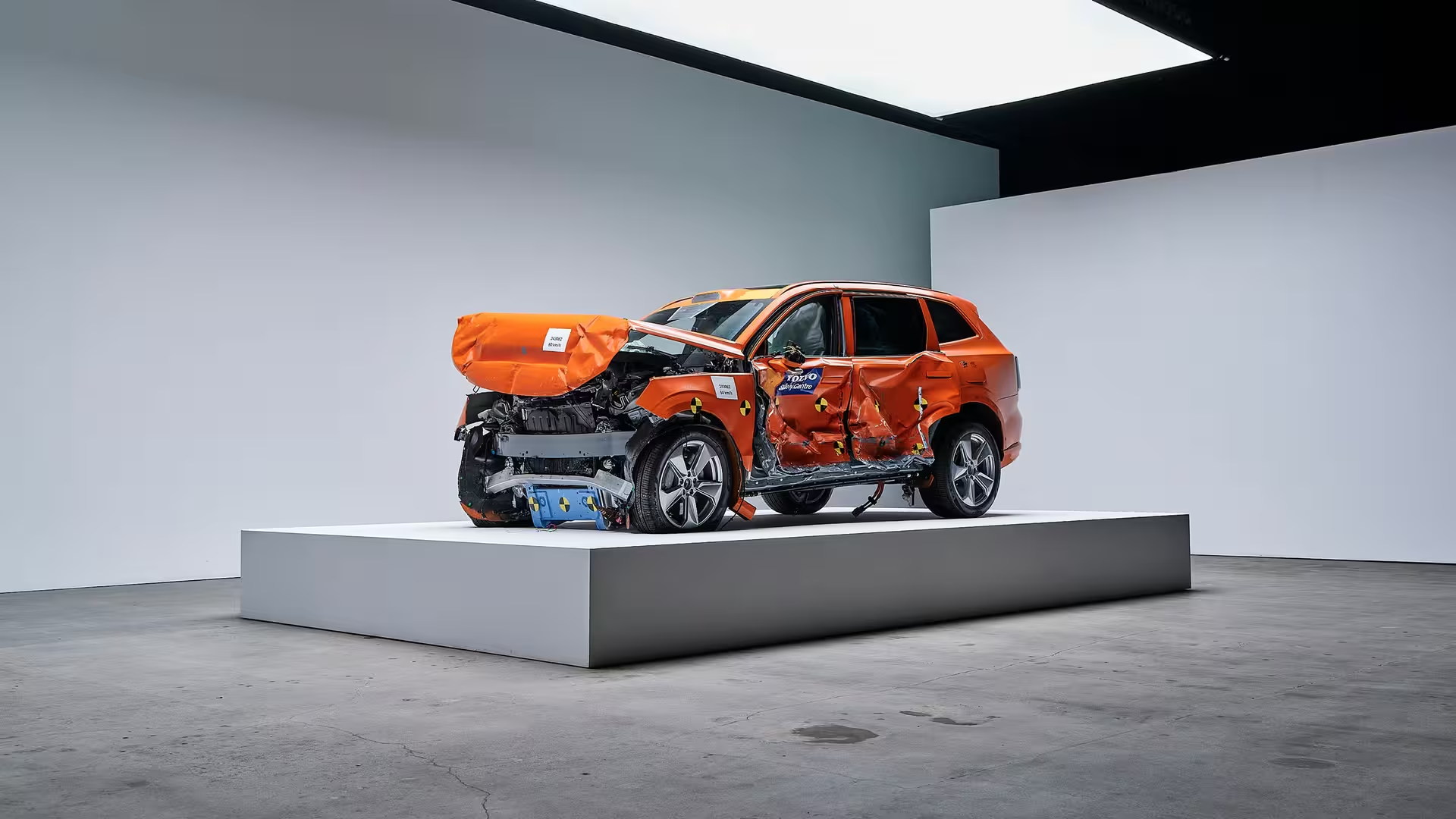
Photo: Volvo Cars Safety Center
Search for crash test ratings on any new car in India and you will frequently encounter numbers that appear to contradict one another. A vehicle model may carry a five-star rating in Europe or Australia, a three-star rating in an earlier Global NCAP assessment, and a five-star score under India’s domestic Bharat NCAP framework.
None of this is a calculation error or a manufacturer glitch. It is the natural outcome of how vehicle safety evaluation operates across different jurisdictions, varying testing protocols, and market-specific vehicle specifications.
At Creddio, our mission is to provide car buyers with objective, verified, and unmanipulated data. This guide breaks down how major global crash-testing programs operate, explains why star ratings cannot be compared directly across agencies, and details why Creddio displays Bharat NCAP (BNCAP) ratings exclusively for new cars sold in India.
1. Major Global NCAP Programs: Protocols and Origins
There is no single global crash test authority. Instead, independent regional programs and national safety frameworks evaluate vehicles against distinct testing matrices, collision speeds, and scoring criteria.
Euro NCAP (Established 1997)
- Governing Body: European New Car Assessment Programme (a voluntary consortium of European transport ministries, motoring clubs, and consumer organizations).
- Core Test Matrix: Frontal offset impact (50 km/h mobile progressive deformable barrier), full-width rigid barrier frontal impact (50 km/h), mobile side barrier impact (60 km/h), and oblique pole side impact (32 km/h).
- Evaluation Pillars: Adult Occupant Protection, Child Occupant Protection, Vulnerable Road User (pedestrian and cyclist) Protection, and Safety Assist Technologies.
- Significance: Euro NCAP updates its protocols every three years, representing one of the strictest vehicle safety evaluation standards in the world.
Global NCAP (Established 2011)
- Governing Body: Towards Zero Foundation (a UK-registered charitable organisation).
- Focus: Promoting vehicle crashworthiness and independent safety testing in emerging automotive markets, primarily across India, Latin America (Latin NCAP), and Africa.
- Safer Cars for India Campaign (2014–2024): Pioneered automotive safety awareness in India over a decade, evaluating dozens of popular domestic models and accelerating the standard fitment of dual front airbags and ABS across entry-level segments.
- Protocol (2022+ update): Frontal offset deformable barrier impact at 64 km/h with 40% overlap, side mobile deformable barrier impact at 50 km/h, and mandatory pole side impact for five-star contenders. Adult Occupant Protection is scored out of 34 points (32 crash test points plus 2 points for seatbelt reminders). A five-star rating requires at least 27 crash-test points alongside standard Electronic Stability Control and side head-protection equipment.
ANCAP (Australasian NCAP, Established 1993)
- Governing Body: Australasian New Car Assessment Program (supported by Australian and New Zealand governments and motoring clubs).
- Harmonisation: Signed an initial cooperation agreement with Euro NCAP in 1999 and formally aligned its testing protocols with Euro NCAP in 2018.
- Vehicle Procurement: Procures test vehicles through manufacturer nomination or independent open-market purchases funded by government road safety grants.
Bharat NCAP (Launched August 2023, Effective October 2023)
- Governing Framework: Automotive Industry Standard AIS-197, administered under the authority of the Ministry of Road Transport and Highways (MoRTH), Government of India.
- Accredited Testing Facilities: Conducted at premier national automotive testing institutes including the Central Institute of Road Transport (CIRT), Automotive Research Association of India (ARAI, Pune), and International Centre for Automotive Technology (ICAT, Manesar).
- Vehicle Procurement: A voluntary program where designated testing agency officials select production-line units through random sampling at the manufacturing plant or dispatch yard, ensuring tested cars match customer-delivered units.
- Current Test Matrix:
- Frontal Offset Impact: 64 km/h into a deformable barrier with 40% overlap.
- Side Impact: 50 km/h mobile deformable barrier impact into the vehicle’s side structure.
- Side Pole Impact: 29 km/h impact against a rigid pole (mandatory for vehicles aiming for three stars or higher).
- Scoring Thresholds for Five Stars:
- Adult Occupant Protection: Minimum 27.00 points out of a maximum of 32.00 points.
- Child Occupant Protection: Minimum 41.00 points out of a maximum of 49.00 points.
- Safety Assist Compliance: Standard fitment of Electronic Stability Control, front seatbelt pretensioners, and three-point seatbelts with reminders across all forward-facing seats.
2. Global Safety Testing Comparison Matrix
| Parameter | Bharat NCAP (AIS-197) | Global NCAP (2022+ Protocol) | Euro NCAP (Current) |
|---|---|---|---|
| Jurisdiction | India (domestic production & imports) | Emerging markets (historic India campaign) | European Union & UK |
| Frontal Offset Speed | 64 km/h (40% deformable barrier) | 64 km/h (40% deformable barrier) | 50 km/h (mobile progressive barrier) |
| Side Barrier Speed | 50 km/h | 50 km/h | 60 km/h |
| Side Pole Speed | 29 km/h (for ≥ 3 stars) | 29 km/h (for 5 stars) | 32 km/h (oblique angle) |
| Adult Protection Max Score | 32 points (16 frontal + 16 side) | 34 points (32 crash + 2 SBR) | Scored as percentage (≥ 80% for 5 star) |
| Child Protection Max Score | 49 points (dynamic + vehicle + CRS) | 49 points (dynamic + vehicle + CRS) | Scored as percentage (≥ 80% for 5 star) |
| 5-Star Adult Threshold | Minimum 27.00 / 32.00 points | Minimum 27.00 / 34.00 points | Overall weighted score across 4 pillars |
| Pedestrian / VRU Testing | Slated for BNCAP 2.0 (2027) | Evaluated under UN R127 compliance | Comprehensive physical impactors |
3. Why Safety Scores Do Not Cross Over Between Agencies
A consumer evaluating a new car in India may wonder why a five-star rating earned abroad cannot simply be cited for the same model in India. Several technical and regulatory factors explain why ratings are not interchangeable:
1. Market-Specific Technical Specifications
Automotive manufacturers engineer vehicle variants tailored to each target market’s specific road conditions, pricing requirements, homologation standards, and local crash regulations. A model badge shared across continents may differ in:
- Standard restraint systems (such as dual airbags versus six or eight standard airbags).
- Inclusion of active safety suites (ADAS radar and camera modules, autonomous emergency braking).
- Child restraint integration (standard ISOFIX mounts versus seatbelt-only securing).
Consequently, an assessment conducted on an export-spec European or Australian model cannot represent the crash performance of a domestically produced Indian variant unless certified under identical type-approval conditions.
2. Differing Scoring Scales and Seatbelt Reminders
Bharat NCAP scores Adult Occupant Protection out of 32 points, whereas Global NCAP evaluates adult protection out of 34 points. The two-point difference exists because Global NCAP awards up to two points for seatbelt reminder systems (SBR) directly within the adult protection calculation. In contrast, Bharat NCAP assesses seatbelt reminders as a qualifying technical prerequisite under Safety Assist Technologies rather than adding bonus points to the structural crash score.
3. Progressive Protocol Evolution
Crash testing standards are not static; they evolve periodically to push automotive safety engineering forward:
- An older five-star rating awarded in 2018 evaluated only frontal offset impact.
- A 2022+ Global NCAP five-star rating requires frontal offset, side barrier, side pole, Electronic Stability Control, and pedestrian protection compliance.
- Future Bharat NCAP 2.0 guidelines (scheduled for implementation in October 2027 following the expiry of the current phase on 30 September 2027) will expand to five mandatory crash tests-introducing a full-width rigid barrier test, an oblique pole impact, and vulnerable road user testing weighted across a 100-point scale.
Comparing a 2018 five-star badge to a 2024 five-star badge compares two entirely different engineering benchmarks.
4. Why Creddio Shows Only Bharat NCAP Ratings
For car buyers shopping in India, prioritizing Bharat NCAP ratings provides decisive practical advantages:
- Tested on India-Spec Vehicles: Bharat NCAP evaluates cars manufactured and sold directly in the Indian market. Vehicles are sampled randomly from factory dispatch inventory or dealership lots, ensuring the tested unit corresponds to what reaches customer driveways.
- Standardized Single Benchmark: Displaying one government-administered national standard eliminates consumer confusion caused by blending older Global NCAP scores with international Euro NCAP badges.
- Regulatory Integrity: Testing is conducted at accredited government facilities (ARAI, ICAT, CIRT) following Automotive Industry Standard AIS-197.
5. What This Means for Creddio Shoppers
To maintain complete transparency with our users, Creddio adheres to the following editorial standards across all car listings:
- Voluntary Testing Transparency: Bharat NCAP is currently a voluntary program. Because automakers submit models progressively, not every new car on sale has been evaluated yet. When a car has not undergone Bharat NCAP assessment, Creddio clearly marks it as “Not Yet Tested” rather than leaving the field ambiguous or substituting an unverified score.
- No Speculative Rating Substitution: We do not replace a missing Bharat NCAP score with an international Euro NCAP, ANCAP, or ASEAN NCAP score from another country, ensuring you are never misled by foreign specifications.
- Balanced Safety Assessment: A crash-test star rating evaluates passive and active structural crash performance under standardized laboratory speeds. While a vital metric, it is one part of overall vehicular safety alongside defensive driving, build quality, and active safety technologies.
6. Don’t Let Rating Anxiety Drain the Joy of Buying Your Car
With automotive forums, social media, and spec sheets constantly debating star ratings, it is easy to fall into analysis paralysis. Some buyers spend weeks agonizing over a three-star versus a four-star score, feeling guilty or second-guessing a car their family genuinely loves and can afford.
Take a step back and look at the real world around us.
In India, tens of millions of people commute every single day on two-wheelers. On a motorcycle or scooter, there are no doors, no seatbelts, no airbags, and zero crumple zones to shield riders from monsoon roads, erratic traffic, or heavy commercial vehicles. For millions of Indian families, graduating from a two-wheeler to their very first car is an incredible, hard-earned milestone. The moment you put your family inside an enclosed passenger car with three-point seatbelts, impact-absorbing crumple zones, and mandatory active safety systems like ABS and ESC, your family’s safety increases by leaps and bounds compared to being exposed on two wheels.
Every passenger car sold in India today must clear mandatory safety compliance under the Central Motor Vehicles Rules (CMVR). While higher NCAP scores are a fantastic engineering achievement to celebrate, a laboratory rating is just one piece of the puzzle. Real-world safety begins with the driver: buckling up on every seat, adhering to speed limits, avoiding distractions, and driving defensively. Because real life is more complex than standardised testing.
Cars are not spreadsheets. They are about weekend road trips, daily commute, festival drives with parents and the genuine pride of owning something you worked hard to build. Be safety-conscious, drive with respect for the road, but do not let internet anxiety drain the happiness out of your milestone. Buy the car that fits your budget, fulfills your family’s needs, and brings a genuine smile to your face every time you turn the key. Life is short-choose the car you love, live happily, and enjoy every kilometer.
Frequently Asked Questions (FAQ)
Is Bharat NCAP crash testing mandatory for all cars sold in India?
No. Under current Automotive Industry Standard AIS-197 guidelines, Bharat NCAP is a voluntary evaluation program. Automakers voluntarily nominate vehicle models for safety assessment. However, mandatory basic safety regulations (such as dual front airbags, ABS with EBD, reverse parking sensors, and front seatbelt reminders) remain compulsory for all type-approved passenger vehicles under the Central Motor Vehicles Rules (CMVR).
Is a five-star Global NCAP rating the same as a five-star Bharat NCAP rating?
While Bharat NCAP’s technical protocols were developed in close consultation with Global NCAP standards (both utilizing a 64 km/h frontal offset test and 50 km/h side barrier test), their scoring structures differ. Bharat NCAP scores Adult Protection out of 32 points, whereas Global NCAP scores out of 34 points. Both programs demand stringent structural integrity and active safety features for a five-star result, but the scores belong to distinct regulatory frameworks.
How does Bharat NCAP ensure the tested car is not specially modified?
To ensure objectivity, vehicle manufacturers cannot hand-build or hand-pick a prototype for testing. Designated officials from accredited testing agencies (ARAI, ICAT, or CIRT) visit the manufacturer’s plant or storage yard to select the base variant of the nominated model at random from regular production-line inventory.
Disclaimer & Limitation of Liability: Safety ratings, crash test scores, and technical parameters presented on Creddio are compiled solely for general consumer educational and informational purposes.
1. Independent Platform Status: Creddio is an independent digital vehicle discovery and pricing comparison platform. Creddio is not a government agency, not an automotive testing laboratory, and is not affiliated with, endorsed by, or sponsored by Bharat NCAP, MoRTH, ARAI, ICAT, CIRT, Global NCAP, Euro NCAP, ANCAP, or any automotive manufacturer.
2. Third-Party Source Material: All safety ratings and crash test details displayed on Creddio are sourced directly from publicly released reports published by respective testing authorities (such as Bharat NCAP under AIS-197). While Creddio endeavors to present data accurately, Creddio makes no representations, warranties, or guarantees of any kind regarding completeness, accuracy, or timeliness of third-party test data.
3. Complete Disclaimer of Liability: Under no circumstances shall Creddio, its parent entity, founders, directors, officers, employees, or affiliates be liable to any user, reader, vehicle buyer, or third party for any direct, indirect, incidental, consequential, special, punitive, or exemplary damages, injury, death, property damage, accident outcome, or financial loss arising out of or in connection with the access to, use of, or reliance on any crash test rating, safety score, opinion, or recommendation published on this platform.
4. Independent Consumer Verification: Real-world vehicle safety and collision survivability depend on numerous dynamic, unpredictable variables beyond laboratory conditions, including vehicle velocity, collision angles, impact partners, environmental factors, proper seatbelt or child seat usage, occupant physiology, or acts of God. A crash test rating does not guarantee survival or injury prevention in any real-world incident. Consumers are strongly advised to independently verify all vehicle specifications, safety equipment lists, and owner manual warnings directly with authorized OEM dealerships and official regulatory publications before purchasing.
Related Stories


Get insights in your inbox
Every week, our editorial team brings you the biggest price cuts, car reviews and comparisons and car-buying guides - so you never miss out