BMW i5 LWB Review: The Electric Alternative to the 530 Li
BMW's long-wheelbase electric sedan trades outright speed for a genuinely comfortable rear seat and low running costs. Here's if it's worth choosing over the petrol 530 Li.
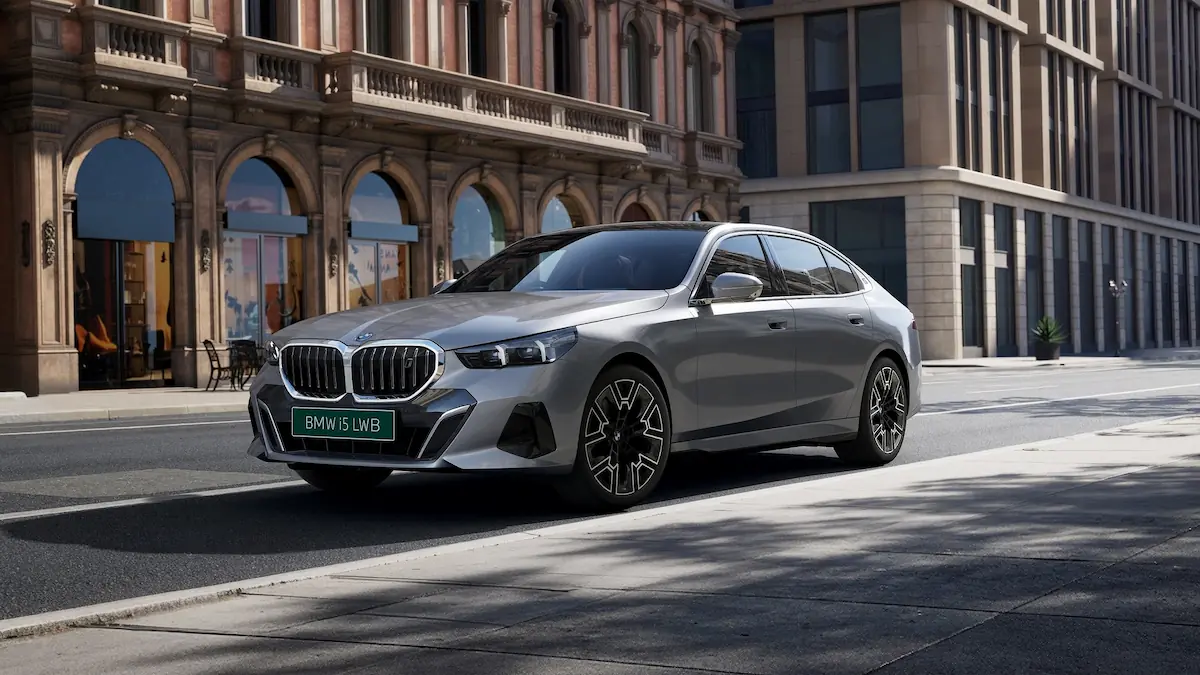
BMW has extended its long-wheelbase strategy in India with the i5 LWB, a locally-assembled electric alternative to the 530 Li that’s built for comfort rather than outright pace. Unlike the direct-import i5 M60 xDrive, which chases supercar-like acceleration, this eDrive 35L variant is tuned for a relaxed, chauffeur-friendly experience, backed by a segment first: air suspension on the rear axle, something the petrol 5 Series doesn’t get. It’s priced at ₹9.6 lakh ex-showroom in a single M Sport variant, sitting roughly ₹ lakh above the 530 Li and considerably below its only real rival, the Lexus ES 500e.
Subtle EV Styling on an Executive Long-Wheelbase Silhouette
BMW has kept the i5’s design closely aligned with the petrol 5 Series, and that’s largely a good thing - you get a familiar, handsome silhouette rather than an EV-specific redesign that risks aging awkwardly. The giveaways are the closed-off kidney grille with an illuminated “i” badge, a blue-haloed BMW roundel, and 20-inch M alloy wheels exclusive to the electric version, which look genuinely sharp rather than the generic aero-optimised wheels many EVs settle for. Around back, the only real tell is the missing tailpipe. The car measures 5,175mm in length and rides on a 3,105mm wheelbase, and comes with adaptive Matrix LED headlights and a panoramic Sky Lounge glass roof similar to what you’d find on the 7 Series.
eDrive 35L Powertrain: How the 268 BHP Electric 5 Series Drives
A 268 BHP, 410 Nm permanent magnet synchronous motor drives the rear wheels, fed by an 81.6 kWh battery pack. Get in, and there’s nothing to relearn - foot on brake, shift into D, and go, with the same smooth, linear throttle response that makes EVs easy for new drivers to modulate confidently. City driving is effortless: part-throttle inputs are enough to overtake slower traffic, there’s ample power on tap when you need to close a gap quickly, and the crawl in heavy traffic stays smooth throughout. A dedicated “B” mode brings in proper one-pedal driving for those who prefer it, bringing the car to a complete halt on lift-off.
On the open road, the 0-100 km/h sprint takes 6.7 seconds, which sounds unremarkable next to current EV benchmarks and is even two-tenths slower than the petrol 530 Li’s 6.5-second run. The number doesn’t quite capture the experience though - the i5 launches off the line noticeably quicker before flattening out, so the initial shove into your seat is more pronounced than in the petrol car even if outright pace ends up similar. Highway cruising is relaxed and quiet, with enough in reserve for confident overtakes without needing to plan them in advance; top speed is capped at 195 km/h. Three drive modes shape the experience: Efficient dulls throttle response and prioritises range, with a further Max Range setting that caps speed at 90 km/h and trims AC output for maximum efficiency; Sport sharpens throttle response, adds steering weight, and unlocks the motor’s full performance for a twisty section of road; and Personal lets you dial in your own mix of power delivery and steering feel.
Regenerative braking offers four levels - Low, Moderate, High, and Adaptive - but all of them live inside the touchscreen rather than on a paddle shifter, which is a genuine inconvenience given how often you’d want to adjust it on the move. Low and Moderate feel the most natural for everyday driving, while High introduces a noticeable head-nod on lift-off, and Adaptive, which reads accelerator input and road speed to adjust itself, takes some getting used to. Cabin insulation is excellent throughout, with wind and road noise well suppressed even at triple-digit speeds, making the rear seat experience genuinely limousine-like - something owners who spend more time being driven than driving will appreciate.
Rear Air Suspension and Limousine Composure on Indian Roads
The rear air suspension is the headline mechanical difference from the petrol 5 Series, and BMW has nailed the tune - it’s clearly built around comfort. Around town, the i5 absorbs small potholes with a composure you wouldn’t expect from a 5-metre-plus sedan riding on 20-inch wheels, and low-speed ride quality closely mirrors the petrol version. Medium and larger potholes still filter through with a thud, so a measured driving style pays off, and given the long wheelbase, big speed breakers need to be taken slowly and carefully despite BMW’s claimed 18mm bump in ground clearance over the global-spec car - scraping the underside on an unusually tall speed breaker isn’t out of the question if you’re not paying attention.
At highway speeds, straight-line stability is excellent and the car feels planted, with the air suspension keeping vertical movement well controlled rather than letting things get floaty. Handling isn’t the primary brief here, but the low centre of gravity from the floor-mounted battery and near-perfect 50:50 weight distribution mean it holds its line confidently through corners when you do want to have some fun on a winding road - it’s simply not built to be a serious handler. Steering is direct and connected, weighting up nicely in Sport mode, and the Variable Sport Steering setup adjusts the rack ratio to keep things responsive without feeling twitchy. All-wheel disc brakes offer strong, progressive stopping power without any of the spongy pedal feel that afflicts some EVs, bringing the car to a confident halt even under hard braking.
Space, Comfort, and Rear-Seat Executive Usability
Step inside and the cabin layout mirrors the petrol 530 Li almost exactly, which works in the i5’s favour - there’s zero learning curve getting comfortable behind the wheel. The Copper Brown and Atlas Grey interior theme carries over unchanged, and while a distinct colourway for the electric version might have helped differentiate it, the familiarity does make for an easy transition if you’re coming from BMW’s petrol line-up. The 12.3-inch digital instrument cluster gets EV-specific layouts showing battery percentage, range, and real-time consumption in kWh/h, and the 14.9-inch curved central touchscreen runs wireless Android Auto and CarPlay, paired with a 17-speaker, 655-watt Bowers & Wilkins sound system that should satisfy most audiophiles. Ventilated vegan leather seats are comfortable and well-supported, though tall drivers may find the under-thigh support a little short, and BMW’s decision not to offer extendable thigh support here feels like a missed opportunity at this price point.
The rear seat is where the LWB badge earns its keep - legroom is genuinely generous, and a 31-degree torso angle combined with cushioned headrests makes for a relaxed, limo-like seating position. The floor sits a touch high, so taller rear passengers may end up in a slightly knees-up posture if the front seat is pushed all the way back, but it’s a minor compromise given everything else on offer, including four-zone climate control, a wireless charging pad with retractable cupholders in the centre armrest, and a Type-C port with an iPad holder mount behind the front seats. One notable miss: there are no rear sunshades, which feels like an odd omission for a car aimed squarely at rear-seat comfort. Boot space is slightly down on the petrol 530 Li, and a space-saver spare wheel sitting on the boot floor eats further into what’s available - there’s no frunk either, with the space under the bonnet left largely empty save for the washer fluid reservoir.
On the charging front, the i5 LWB runs on 400V architecture rather than BMW’s newer 800V setup, which means DC fast charging tops out at 160 kW - enough for a 10-80% charge in 33 minutes. An 11 kW AC wallbox at home takes the car from 0-100% in roughly 8 hours, and BMW notes that the vast majority of its EV owners charge this way day-to-day rather than relying on public fast chargers. BMW claims an MIDC range of 669 km, though real-world figures land closer to 400-450 km depending on driving style, with the Max Range setting inside Efficient mode helping stretch that further when needed. A Digital Key feature, shareable with up to 18 people via NFC card or phone, and battery pre-conditioning for optimal charging round off the tech package.
BMW i5 LWB: Variant-wise Prices (Ex-showroom)
| Variant | Ex-showroom Price |
|---|---|
| i5 eDrive 35L M Sport | ₹9,60,000 |
| i5 eDrive 35L M Sport (First Edition) | ₹9,60,000 |
The First Edition, limited to 99 units, was reported sold out ahead of launch and is priced identically to the standard M Sport variant.
Should You Choose the BMW i5 LWB Over the 530 Li?
The BMW i5 LWB makes a genuinely compelling case as an electric alternative to the 530 Li, rather than simply an EV for EV’s sake - the rear air suspension delivers real, tangible comfort gains, the cabin experience carries over the 5 Series’ familiar quality and tech, and low running costs sweeten the deal further for anyone doing meaningful annual mileage. The touchscreen-dependent regen controls and the absence of rear sunshades are avoidable niggles rather than dealbreakers, and outright acceleration numbers matter less here than the way the car actually feels to drive and be driven in. At ₹9.6 lakh, a roughly ₹ lakh premium over the 530 Li, buyers who spend more time in the back seat than behind the wheel - and who’ve made peace with EV ownership in India - will find the i5 LWB a genuinely easy car to recommend over its petrol sibling.
Planning to buy the BMW i5 LWB?
Authorized dealerships in your city put forward their best on-road price upfront, compare transparent offers side by side right from your phone. Free for buyers, with zero spam calls.
Related Stories
Get insights in your inbox
Every week, our editorial team brings you the biggest price cuts, car reviews and comparisons and car-buying guides - so you never miss out