MG Hector Tomahawk EV Review: A Bigger, Bolder Electric SUV
MG's new electric SUV brings a 517km claimed range, V2H power backup, and genuinely usable rear seats. Here's how it holds up on Indian roads.
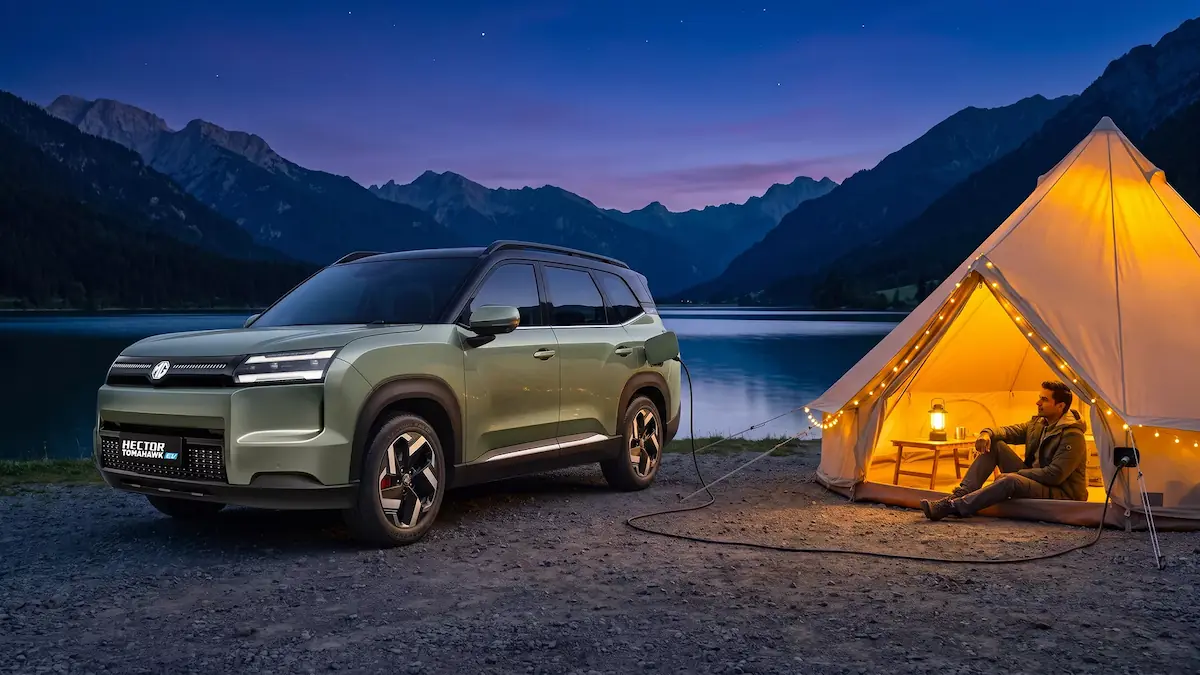
MG has been steadily filling out its EV line-up in India, and the Hector Tomahawk slots in above the Windsor as the company’s newest electric SUV, available in both 5-seat and 7-seat configurations. It’s built on MG’s new ADAPT platform, gets a 69.2 kWh battery paired with a single front-mounted motor making 201 BHP and 310 Nm, and comes with a claimed MIDC range of 517 km. Prices start at ₹9.50 lakh for the base 7-seater and go up to ₹3.50 lakh for the top-spec Essence 7-seater, with a Battery-as-a-Service option bringing the entry price down to ₹3.99 lakh if you’re comfortable paying a per-km battery rental instead.
Hector Tomahawk EV: New ADAPT Platform and Stance
Despite sharing the Hector name, this EV looks nothing like its ICE sibling - it’s a ground-up different design with a tall, upright stance that gives it real road presence. LED projector headlamps with adaptive high beam, an illuminated MG badge up front, and wraparound LED tail-lamps at the rear give it a distinctly modern face, while black cladding around the wheel arches and roof rails round off the SUV styling. At 4,745mm long, 1,850mm wide, and 1,770mm tall on a 2,810mm wheelbase, it’s noticeably larger than the regular Hector. Build quality feels solid, with heft in the doors and tailgate and minimal panel flex, though the 18-inch wheels with 225/55 tyres do look a touch undersized against the car’s overall bulk. Ground clearance is rated at 230mm at the battery pack, which handled everyday speed breakers and potholes on test without complaint.
Behind the Wheel: 201 BHP Motor and Real-World Punch
Press the start button with your foot on the brake, and the Tomahawk moves off with the smoothness typical of a well-sorted EV - no jerks, no drivetrain noise, just an easy, refined pull away from a standstill. City driving is where it feels most at home; there’s enough low-end torque to close gaps in traffic quickly, and the whole experience stays relaxed even in stop-start conditions. On the open road, MG claims an 8.2-second 0-100 km/h sprint, which isn’t outright quick but is brisk enough to get ahead of most traffic off the line, aided by the instant torque delivery electric motors are known for. Triple-digit cruising is effortless, and overtakes on the highway come easily with a firm press of the accelerator - though driving it hard does eat into range noticeably faster.
Four drive modes are on offer: Standard, Eco, Sport, and Custom. Standard sits in the middle and works well for most situations, balancing range and performance sensibly. Eco softens throttle response and suits dense city traffic, while remaining perfectly usable on the highway too. Sport sharpens throttle response and firms up the steering and brakes, useful for quick overtakes on open roads, though it’s better reserved for the highway than the city, where the power delivery can feel a bit spiky. One thing worth noting: there’s no proper one-pedal driving mode here, and regen levels can only be adjusted via the touchscreen rather than through physical paddles, which is a genuine miss for anyone doing a lot of stop-start city driving. Even the strongest of the four regen settings feels fairly mild compared to some rival EVs, so you’ll still be relying on the brake pedal more than you might expect.
Refinement is where EVs typically shine, and the Tomahawk is no exception - cabin insulation is impressive, with wind and road noise both well controlled, making for a genuinely quiet cabin at speed.
Multi-Link Suspension, Highway Stability, and City Manners
Suspension duties are handled by MacPherson struts up front and a multi-link setup at the rear, and the tune leans firm. At low speeds, the ride is on the jigglier side, and larger potholes do make themselves felt inside the cabin, though things smooth out noticeably as speed builds. Straight-line stability is a genuine strength - the car feels planted and composed even at triple-digit highway speeds, with vertical movement well controlled over rough patches. Through long curves it holds its line confidently, and while there’s some body roll on twistier roads given the height and weight involved, it stays well managed; this is a tall SUV, and driven with that in mind, it doesn’t disappoint. The stock tyres are fine for a regular commute or sedate driving, but they do start squealing earlier than expected if you push into hairpin bends with any real enthusiasm, so spirited drivers may want to consider an upgrade.
Steering is light and easy around town, weighting up reasonably as speeds rise, though it doesn’t offer much genuine feedback at higher speeds - there’s also a touchscreen option to adjust steering weight manually, but it feels somewhat artificial in practice. Braking hardware includes discs on all four wheels with ABS and EBD, and the car pulls up confidently from speed in a straight line without drama, even if outright pedal feel could be better.
Space, Reclining Seats, and Everyday Usability with V2H Tech
Step inside and you’re greeted by an almond-brown and black “Desert Squadron” theme that MG says draws inspiration from fighter-plane aesthetics - whether or not that lands with you is subjective, but the lighter cabin combined with generous glass area does make the interior feel airy and spacious, even if it’s likely to show dirt and stains more readily over time. The dashboard is built around an 8.8-inch digital instrument cluster and a large 15.6-inch touchscreen with a Gen AI-powered voice assistant, gesture control, and even a karaoke mode. Plastic quality is acceptable through most touch points, and there were no squeaks or rattles on test, giving the cabin a well-assembled feel overall.
Practicality is a genuine highlight. Rear seat space is generous, with excellent headroom and enough knee room for even taller passengers to sit comfortably one behind the other, aided by a flat floor that makes the middle seat usable too. The rear seat backrest reclines, there’s a wide, soft centre armrest with two cupholders, dedicated A/C vents, USB-C charging, and ISOFIX anchors on both sides - this is a car that’s clearly been designed with families in mind, even if the higher floor typical of EVs does result in a somewhat knees-up seating position for taller rear passengers. Front seat comfort is a little more mixed; the seats are well-bolstered but on the softer side of cushioning, and some testers found the driver’s seat less comfortable over longer stints. Boot space is a genuinely useful 610 litres, expanding to 1,053 litres with the rear seats folded, though there’s no frunk given the motor sits up front.
Feature-wise, the Tomahawk is well equipped: ventilated front seats, a panoramic sunroof, a 10-speaker Infinity sound system with a subwoofer that stays clean and distortion-free even at high volumes, wireless Android Auto and CarPlay, 256-colour ambient lighting, and a 360-degree camera with transparent chassis view. It also supports Vehicle-to-Load and Vehicle-to-Home functionality, meaning you can genuinely power appliances or back up your home during an outage using the car’s battery - a feature that’s likely to matter more to Indian buyers than most realise until they actually need it. A few misses stand out too: the glovebox gets neither illumination nor cooling, and several core functions, including climate and seat ventilation, are locked behind the touchscreen with no physical shortcuts, meaning some adjustments are only safely done once you’ve stopped the car.
On charging, the 69.2 kWh LFP battery pack can be topped up from 10-100% in a claimed 12.5 hours using a 7.4 kW home AC charger, or from 30-80% in around 35 minutes on a 90 kW DC fast charger. MG’s claimed MIDC range of 517 km is optimistic in real-world use - expect closer to 400 km with reasonably measured driving, less if you’re regularly making use of that instant torque.
MG Hector Tomahawk EV: Variant-wise Prices (Ex-showroom)
| Variant | Seating | Ex-showroom Price |
|---|---|---|
| Excite | 7-Seater | ₹9,49,800 |
| Exclusive | 7-Seater | ₹1,99,800 |
| Essence | 5-Seater | ₹2,99,800 |
| Essence | 7-Seater | ₹3,49,800 |
A Battery-as-a-Service option is also available, with vehicle pricing between ₹3.99 lakh and ₹7.49 lakh and a battery rental of ₹.90 per km. A plug-in hybrid version of the Tomahawk is separately available on the Exclusive and Essence 7-seater trims.
Who Should Buy the Tomahawk EV, and Why
The Hector Tomahawk EV makes a strong case for itself as a genuinely family-friendly electric SUV - spacious, well-equipped, comfortable in the rear, and backed by a lifetime battery warranty for the first owner along with a solid ownership package including free roadside assistance and a buyback guarantee. The lack of one-pedal drive and touchscreen-dependent regen adjustment are real inconveniences for daily city use, and the ride could be a touch more forgiving at low speeds, but neither is a dealbreaker given everything else on offer. For families looking to make the jump to an electric SUV without compromising on space or practicality, the Tomahawk is worth a serious look, and the Essence 5-seater strikes a sensible balance of features and price for buyers who don’t need the extra two seats.
Planning to buy the MG Hector Tomahawk EV?
Authorized dealerships in your city put forward their best on-road price upfront, compare transparent offers side by side right from your phone. Free for buyers, with zero spam calls.
Related Stories
Get insights in your inbox
Every week, our editorial team brings you the biggest price cuts, car reviews and comparisons and car-buying guides - so you never miss out