BMW i7 Facelift Review: Bolder, Bigger Battery, Better Rear Seat
The BMW i7 50 xDrive gets a sharp new face, a 111.5 kWh battery, dual-motor AWD, and a rear cabin that rivals a business-class seat. At Rs. 1.95 crore.
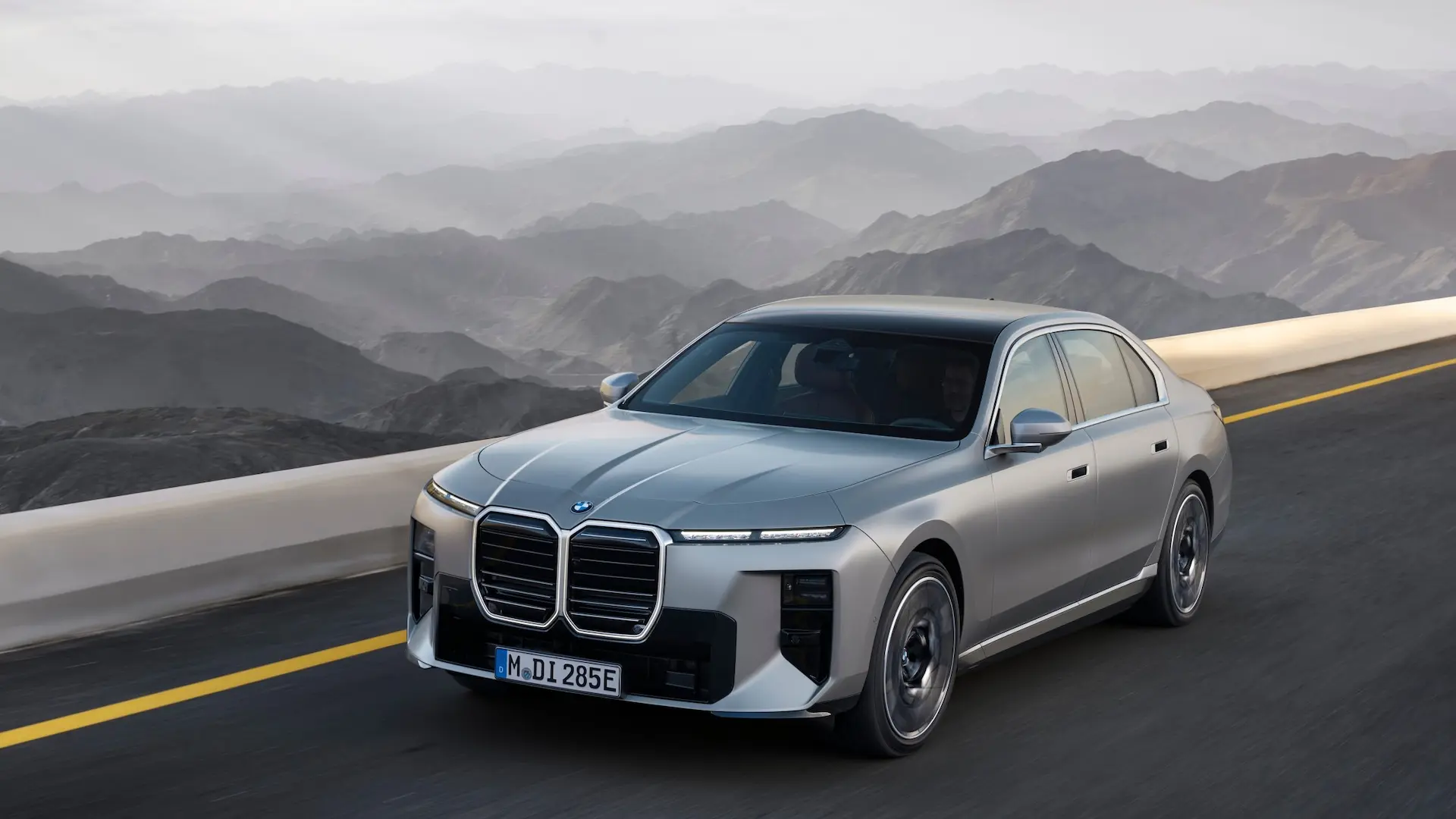
The BMW i7 was always going to be a difficult car to appraise with a straight face. It is an executive electric sedan where the rear seat is the product, the powertrain is the enabler, and the driver is secondary to whoever is being chauffeured. With the G70 LCI facelift, BMW has sharpened the design into something harder to dismiss at first glance, upgraded the battery, and shifted from rear-wheel drive to a dual-motor all-wheel-drive setup, all while keeping the price exactly level with the outgoing 7 Series at Rs. 1.95 crore (ex-showroom). There is also a direct import M70 xDrive variant priced at Rs. 2.65 crore for buyers who want the full performance specification. This review focuses on the i7 50 xDrive, the locally assembled variant that will represent the overwhelming majority of sales.
What’s Changed on the G70 LCI
The design changes on the facelift are substantial enough to make the outgoing car look restrained in comparison. The front gets a larger kidney grille with horizontal slats replacing the vertical ones of the pre-facelift car, now illuminated and flanked by vertically stacked LED headlamps with Swarovski diamond-cut glass elements in the DRL strips. The bonnet picks up prominent creases that run directly into the grille, and the overall nose reads as significantly more assertive than before. At the rear, the tail-lamps have grown considerably and now nearly merge across the full width of the car, a look that is bold and divisive in equal measure. The cleaner rear bumper, free of the chrome lining that the outgoing car carried, is an improvement.
For the facelift, BMW has introduced a dual-tone exterior option available at the dealership, adding a Maybach-like contrast roof treatment to the five standard single-tone options: Mineral White, Tanzanite Blue, Carbon Black, Vancouver Green, and Oxide Grey. Wheels have moved from 21-inch to 20-inch bi-colour alloys with a seven-spoke pattern, shod with Pirelli P Zero E tyres in a staggered setup: 255/45 at the front and 285/40 at the rear. Blue brake calipers are visible through the spokes. Build quality and fit and finish are excellent throughout, as expected at this price point.
The flush door handles and automatic door operation carry over, with all four doors opening and closing via buttons on the door card, a long-press sensor on the exterior, or through the touchscreen. A manual release latch is retained as a backup on each door. The glass roof spans the entire roofline and is heat-insulated.
Inside: Where the Facelift Makes Its Strongest Case
The cabin redesign is the LCI’s most meaningful upgrade. The outgoing i7’s interior, while refined, shared too much visual DNA with the smaller i5. The new cabin opens with a panoramic head-up display strip that runs across the full width of the dashboard, flanked by a redesigned 17.9-inch central touchscreen with a 3,340 x 1,440 pixel resolution and a 14.6-inch full HD front passenger display. The asymmetric, slightly slanted shape of the main screen takes a moment to adjust to, but the interface is cleaner and less cluttered than the outgoing system.
The steering wheel is a distinctive flat-top, flat-bottom unit with side thumb contours. It looks polarising in photographs but proves genuinely ergonomic in use. Left-spoke controls handle adaptive cruise, right-spoke handles multimedia and telephony. The horn, by contrast, sounds surprisingly thin for a car at this price level.
Front seat quality is excellent, with generous bolstering, headrest-integrated speakers, and the full range of heating, ventilation, and massage functions. The driving position sits low, sedan-style, which is a deliberate departure from the elevated seating position of EV platforms that share architecture with IC-engine cars.
The rear cabin is where the i7 justifies its positioning. Lounge seating drops the front passenger seat flat forward while extending the calf support of the rear seat, creating a full recline angle of up to 43 degrees. The seat cushioning is exceptionally soft, legroom is generous thanks to the long wheelbase, and the rear occupant is not forced into a knees-up sedan posture. Each rear seat gets full heating, ventilation, and massage, controlled through a dedicated small screen on the door armrest that handles seat adjustments, climate control, window blinds, and ambient lighting. A wireless charging pad is integrated into the rear centre armrest.
The centrepiece is Theatre Screen 2.0: a 31.3-inch, 8K resolution display that deploys from the ceiling above the rear seats, complete with an integrated camera for video conferencing and a reworked user interface compared to the outgoing car. It is paired with the 1,965W, 35-speaker Bowers and Wilkins Diamond Surround Sound system with Dolby Atmos. An HDMI port enables console gaming in the rear cabin. As a rear-seat entertainment setup, nothing else in the Indian market comes close at any price.
Vehicle controls including regenerative braking levels, drive modes, ride height adjustment, and HVAC are all managed through the main touchscreen. The lack of physical shortcuts for functions like ride height lift, which was a physical button on the pre-facelift centre console, is a genuine usability step backward. The touchscreen itself is capable and well-organized, but hunting through menus while navigating a Mumbai speed breaker is not the right workflow for a car of this nature.
Boot space is rated at 500 litres, though the space-saver spare tyre sits on the boot floor and reduces usable loading depth. A secondary storage area beneath the floor holds the charging cable.
Powertrain: 449 BHP, Now All Four Wheels
The i7 50 xDrive moves from the rear-wheel-drive eDrive 50 to a dual-motor all-wheel-drive configuration, retaining the same 449 BHP output but now paired with a 660 Nm torque figure sent to all four corners. The battery has grown from 101.7 kWh to 111.5 kWh, using sixth-generation BMW eDrive cylindrical cells. Notably, BMW’s electrically excited synchronous motor design avoids the rare-earth permanent magnets that most EV motors depend on, with the rotor energized via a precisely controlled electrical feed instead.
In city conditions, the Efficient mode is the right choice. Throttle response is linear and progressive, and the i7 covers urban ground with a composure that belies both its size and its power output. It is genuinely easy to drive slowly in a car that could accelerate to 100 km/h in 5.5 seconds, which matters when the primary occupant is in the rear seat. On the highway, Efficient mode is still more than adequate for planned overtakes. Sport mode sharpens inputs considerably, and the acceleration in that setting has the seat-pinning quality that large EVs deliver better than any petrol car.
The switch to AWD adds 0.8 seconds to the 0-100 km/h sprint compared to the outgoing eDrive 50’s 4.7-second time. That 5.5-second figure is entirely academic in real-world use. The top speed has been reduced to 210 km/h from 240 km/h on the previous car.
Regenerative braking is managed through the touchscreen in four settings: Low, Moderate, High, and Adaptive. The absence of paddle shifters for regeneration adjustment is a usability frustration. The Adaptive mode, while theoretically convenient, does not feel intuitive in practice. Low regeneration with manual modulation through the brake pedal is the more natural approach for most drivers. Full one-pedal driving engages in B mode.
NVH levels are exceptional. No engine noise, no gearbox vibration, and wind and tyre noise are both well contained even at sustained highway speeds. Conversation at any volume is entirely comfortable with all four occupants aboard.
The WLTP-rated range is 728 km. A realistic real-world expectation on Indian roads is in the 550 to 600 km range, which comfortably eliminates range anxiety for both urban daily use and intercity highway runs. DC fast charging supports up to 250 kW, with a claimed 10 to 80% top-up in 28 minutes. AC charging supports up to 22 kW, with a full 0 to 100% charge in approximately 5 hours and 45 minutes.
Ride, Handling, and Steering
The adaptive air suspension with auto-levelling carries over from the pre-facelift car, now paired with rear-wheel steering. The tune is comfort-first, and the result over typical Mumbai road surfaces is a surprisingly absorbent, quiet ride for a car weighing approximately 2.7 tonnes. Minor urban imperfections are filtered with minimal intrusion. Larger speed breakers require care: the long wheelbase and low ride height combination makes diagonal approaches and the touchscreen-activated suspension lift button a part of the regular driving rhythm. Moving the lift function to the touchscreen from the physical button on the pre-facelift centre console is a step backward in day-to-day usability.
On the highway, the suspension settles into a planted, speed-masking composure. Sport mode reduces ride height by approximately 10mm and stiffens the damping, adding a sharper edge to what is otherwise a comfort-biased setup. On twisting roads, the AWD setup and rear-wheel steering combine to make the i7 significantly more capable in corners than a 2.7-tonne sedan has any right to be. Body roll is minimal, turn-in is sharp, and the car holds its line through corners with real conviction. The steering provides useful feedback when pushed and weights up well on the highway. The rear-wheel steering is most appreciated in city parking rather than dynamic driving, where it shaves the turning radius to a more manageable figure.
Braking uses blue-caliper discs at all four corners. The bite is strong for emergency stops but lacks the progressive, finely graduated feel that the best BMW IC-engine cars deliver at the pedal. Adequate for the car’s intended use, but not a highlight.
Should You Buy the BMW i7 Facelift?
| Variant | Drive | Ex-showroom Price |
|---|---|---|
| i7 50 xDrive | Dual-motor AWD | Rs. 1,95,00,000 |
| i7 M70 xDrive | Tri-motor AWD (CBU) | Rs. 2,65,00,000 |
The i7 50 xDrive makes a compelling case for anyone buying in this segment who is unwilling to compromise on rear-seat experience, wants the assurance of a locally assembled product, and can live with the touchscreen-centric control philosophy that BMW has fully committed to. The Theatre Screen 2.0, lounge seating, Bowers and Wilkins audio, and 550 to 600 km real-world range combine into a package with no direct competitor in India at this price.
The honest reservation belongs to buyers who have cross-shopped the Mercedes-Benz EQS 580. On specification alone, the EQS 580 offers more range, more power, faster acceleration, and is priced approximately Rs. 65 lakh lower. What the i7 offers that the EQS does not is the Theatre Screen, the lounge seat recline experience, and the BMW driving dynamic that remains detectable even in a car of this size and weight.
For the buyer who is primarily a rear-seat passenger, the i7 50 xDrive is the right choice at Rs. 1.95 crore. For the buyer who drives themselves and values outright performance alongside luxury, the gap to the M70 at Rs. 2.65 crore is worth serious consideration.
Planning to buy the BMW i7 Facelift?
Authorized dealerships in your city put forward their best on-road price upfront, compare transparent offers side by side right from your phone. Free for buyers, with zero spam calls.
Related Stories
Get insights in your inbox
Every week, our editorial team brings you the biggest price cuts, car reviews and comparisons and car-buying guides - so you never miss out