Porsche Cayenne Electric Unveiled: 1,156 PS, 642 km Range, Orders Open
Porsche's all-electric Cayenne arrives with up to 1,156 PS, 400 kW charging, and a 642 km WLTP range. Here's everything confirmed about the Cayenne Electric and Turbo Electric.
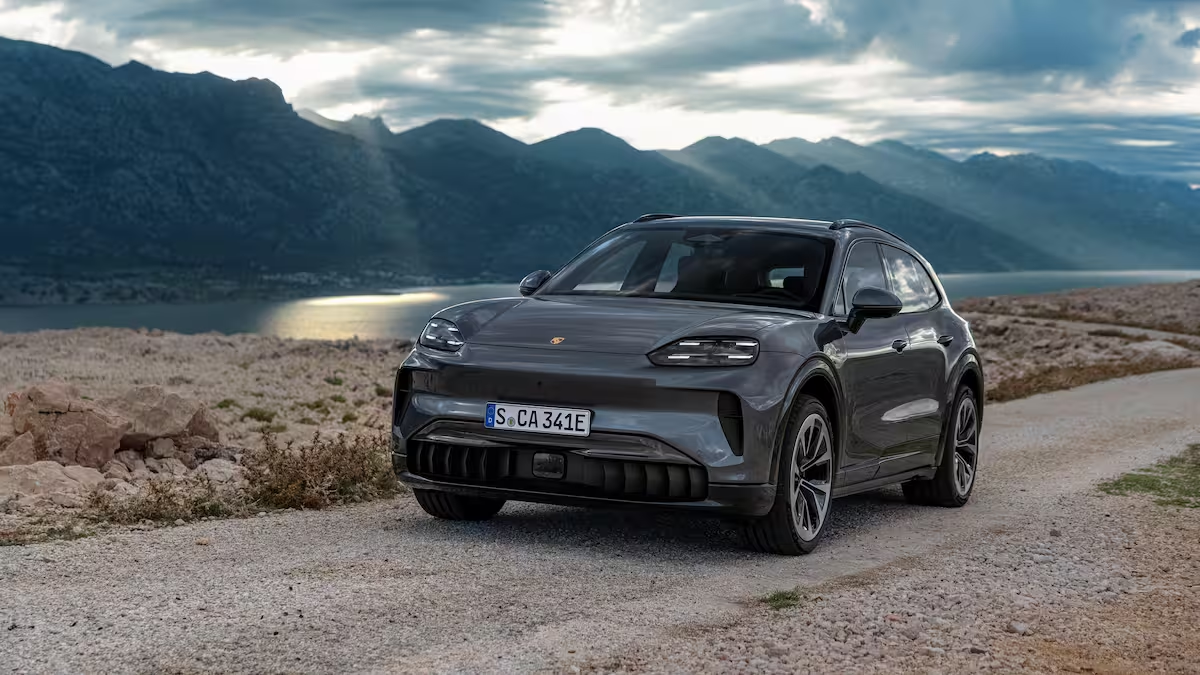
Porsche has taken the wraps off the all-electric Cayenne, and the performance figures it carries are genuinely extraordinary for a five-seat family SUV. The range-topping Cayenne Turbo Electric makes 1,156 PS with Launch Control active - Porsche’s most powerful production car ever built - while the standard Cayenne Electric starts at a still-formidable 408 PS in everyday driving. Both models go on sale now, complementing the existing combustion and plug-in hybrid Cayenne lineup rather than replacing them.
This is a significant moment for Porsche, which has been electrifying at pace: around 36% of its global sports car sales in 2025 are already electrified. The Cayenne Electric arrives on a clean-sheet electric platform, not a converted ICE architecture, bringing with it 800V charging infrastructure, optional wireless charging, and what Porsche claims is the most aerodynamically efficient Cayenne yet at a drag coefficient of 0.25.
Two Models, Very Different Performance Propositions
The Cayenne Electric lineup launches with two variants. The base Cayenne Electric uses dual motors producing 300 kW (408 PS) in normal operation, climbing to 325 kW (442 PS) and 835 Nm with Launch Control. The 0–100 km/h sprint takes 4.8 seconds, with a 230 km/h top speed - entirely appropriate for an SUV of this size and intent.
The Cayenne Turbo Electric is a different proposition entirely. In normal operation it outputs 630 kW (857 PS), but the Push-to-Pass function - activated at the press of a button - adds another 130 kW (176 PS) for 10 seconds, pushing peak output to 850 kW (1,156 PS) with 1,500 Nm of torque under Launch Control. The result is a 2.5-second 0–100 km/h sprint and a 260 km/h top speed. To sustain these outputs, Porsche fitted direct oil cooling to the Turbo’s rear motor - a technology derived from the brand’s motorsport programme.
Regenerative braking is equally impressive: the Cayenne Electric recovers up to 600 kW during deceleration - levels Porsche compares to Formula E - meaning roughly 97% of everyday braking events are handled entirely by the motors, with mechanical brakes rarely needed.
Battery, Range, and Charging Speed
Both variants share a newly developed 113 kWh high-voltage battery with double-sided cooling for thermal management. The Cayenne Electric returns up to 642 km on the WLTP cycle; the Turbo Electric returns up to 623 km. Real-world figures will sit lower, but the margin of comfort these numbers offer for long-distance Indian highway use - or intercity runs between Mumbai, Pune, or Delhi and surrounding cities - is substantial.
The 800V architecture enables DC charging at up to 390 kW in standard conditions, and up to 400 kW under specific optimal charging conditions. From 10–80% SoC takes under 16 minutes on a compatible rapid charger, and a 10-minute top-up adds 325 km of range on the Cayenne Electric (315 km on the Turbo). These figures place it among the fastest-charging production vehicles available today.
The Cayenne Electric is also the first Porsche to offer inductive wireless charging as an option, at up to 11 kW - the car detects the floor-mounted charging plate and starts automatically without a plug.
Design and Aerodynamics
The Cayenne Electric is 55 mm longer than the combustion model overall, with the wheelbase growing by nearly 130 mm to 3,023 mm. At 4,985 mm long and 1,980 mm wide, the proportions are unmistakably Cayenne, but the design has been meaningfully evolved rather than facelifted. Slim Matrix LED headlights span the full width of the low bonnet, frameless doors feature on both variants, and the rear gets an illuminated Porsche lettering strip with 3D-look animated graphics.
The Cayenne Turbo Electric adds Turbonite-accented detailing - on the Porsche crests, alloy wheel faces, window surrounds, and the rear light strip - plus active aeroblades at the rear that extend the lateral tear-off edges for improved high-speed range. Both models feature Porsche Active Aerodynamics with movable cooling air flaps and an adaptive roof spoiler. The result is a 0.25 Cd drag coefficient, making this one of the most aerodynamically efficient SUVs in the segment.
An Off-Road package with a modified front geometry and revised approach angles is available for buyers who intend to use the Cayenne’s all-terrain capability seriously.
Cabin: Bigger, Smarter, More Configurable
The 130 mm wheelbase stretch translates directly into rear legroom and passenger comfort. The rear seat system is electrically adjustable as standard, sliding between a comfort position and a cargo configuration. Luggage capacity spans 781 to 1,588 litres in the main boot, with an additional 90-litre front compartment, and towing capacity goes up to 3.5 tonnes depending on specification.
The centrepiece of the cabin is the Flow Display - a curved OLED panel integrated seamlessly into the centre console - paired with a 14.25-inch OLED instrument cluster and an optional 14.9-inch passenger display. Together they form the largest total display area fitted to any Porsche. An augmented reality head-up display, projecting the equivalent of an 87-inch image 10 metres ahead of the car, is available for the first time on a Cayenne.
Porsche has retained physical controls for frequently used functions like climate and audio - a considered decision that keeps tactile feedback in moments when the driver’s attention should stay on the road. New Mood Modes adjust seating position, lighting, climate, sound profile, and display colour scheme simultaneously. Panel heating extends beyond seat cushions to warm door armrests and contact surfaces. The sliding panoramic roof uses electrically switchable liquid crystal film to vary light transmission without a physical blind.
Customisation depth is exceptional: 13 standard colours, nine wheel designs from 20 to 22 inches, 12 interior combinations, and five interior packages, before stepping into Porsche Exclusive Manufaktur’s Paint to Sample and the bespoke Sonderwunsch programme.
What India Buyers Should Know
Porsche India has not yet confirmed local pricing, launch timeline, or the variant lineup for the Indian market. Porsche models arrive as CBUs in India, and the Cayenne Electric - given its battery size and the current EV import duty structure - is likely to land well above ₹2 crore ex-showroom when it does reach Indian shores. Buyers interested in early allocation should register with their nearest Porsche Centre, as initial CBU volumes for India tend to be limited.
The existing Cayenne with combustion and plug-in hybrid powertrains will continue to be sold in parallel globally, with Porsche confirming all three drivetrain options will remain available through the end of the decade.
Planning to buy the Porsche Cayenne Electric?
Authorized dealerships in your city put forward their best on-road price upfront, compare transparent offers side by side right from your phone. Free for buyers, with zero spam calls.
Related Stories
Get insights in your inbox
Every week, our editorial team brings you the biggest price cuts, car reviews and comparisons and car-buying guides - so you never miss out